News
News
Published on
2019 Nov 22Awareness-raising workshop for decision-makers and administrators on ecosystem values and services
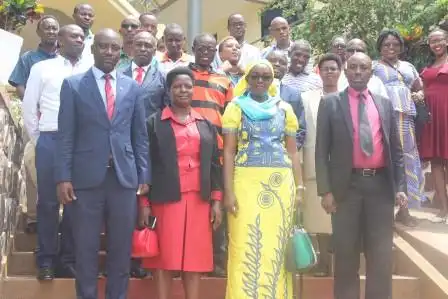
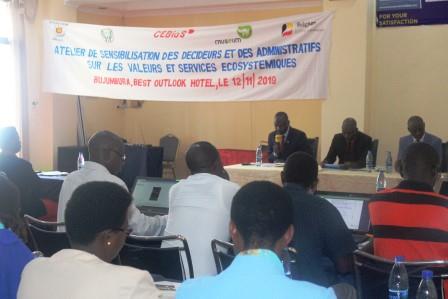
On November 12, 2019, a workshop was held in the premises of the Hotel Best Outlook Hotel to raise awareness among decision-makers and administrative officials on ecosystem values and services as part of the program of research, information exchange, awareness-raising and conservation of biodiversity.
Were present:
The Permanent Secretary, Representative of the Minister of the Environment, Agriculture and Livestock, the Director General of the Burundian Office for the Protection of the Environment (OBPE), the Honorable Parliamentarians, the Professors of University Institutions, the other Directors General, the Directors and Representatives of Non-Governmental Organizations, the Directors and the Representatives of Non-Governmental Organizations, the Directors and the Representatives of Non-Governmental Organizations, the Directors and Representatives of Non-Governmental Organizations, the journalists of local radio and the various executives of the OBPE and other institutions.
Welcome word
welcomed the participants warmly and thanked them for having responded to the invitation to take part in this workshop. Introductively, he emphasized the importance of ecosystem goods and services, particularly in soil fertilization, hydrological and climatological regulation, filters against erosion and pollution, in the perpetuation of biodiversity, etc.
|
Thus, he added that it is therefore necessary to value these goods and services by carrying out responsible actions, conservation and sustainable use of biodiversity. Finally, he expressed heartfelt thanks to all stakeholders and all our development partners who continue to support OBPE in its mission to protect the environment and sustainably manage biodiversity for the benefit of current and future generations. |
| Welcome message from the CEO of OBPE |
Workshop opening speech
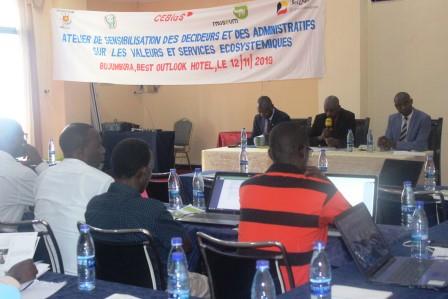
The opening speech of the workshop was delivered by the Permanent Secretary, Representative of the Minister of Environment, Agriculture and Livestock. The latter began by showing that it was an honor and a real pleasure to proceed with the solemn opening of this workshop.
|
He took the opportunity to thank the participants again for having temporarily interrupted their daily activities to respond to the invitation to participate in this workshop. He explained that this workshop, which would last only one day, had an important role, in particular that of triggering a change in attitudes among decision-makers, administrators and the general public in order to adopt appropriate options to save our biodiversity and associated goods and services. He added that in Burundi, these goods and services are not yet valued justifiably. Many human activities destroy them. He also deplored a severe lack of studies on the economic value of these biodiversity goods and services, which should visualize the importance of ecosystems and encourage their protection. |
|
|
|
Opening remarks of the workshop by the Permanent Secretary |
He added that in Burundi, these goods and services are not yet valued justifiably. Many human activities destroy them. He also deplored a severe lack of studies on the economic value of these biodiversity goods and services, which should visualize the importance of ecosystems and encourage their protection.
Then, he invited the participants to follow with interest the various presentations that show the contribution of ecosystems and biodiversity in the socio-economic life of the population in Burundi. And therefore, give their contributions, commitments and recommendations to establish the conservation and sustainable management of our biodiversity and associated goods and services.
After the opening remarks of the Permanent Secretary, various presentations on ecosystem values and services followed.
Presentations on the values of ecosystem goods and services
The first presentation made by Mr Longin NDAYIKEZA focused on the theme: “Ecosystem Services (ES) in the Protected Areas of Burundi”.
|
During this presentation, biodiversity was defined under its three levels, in particular ecosystem biodiversity, specific biodiversity or species biodiversity and finally genetic biodiversity. It has also been pointed out that man is at the center of this biodiversity who can at the same time decide to save or destroy it. In the event that humans destroy ecosystems, thanks to changes in land use, has it turned out that their restoration is often expensive and sometimes impossible? It was also explained that goods and services are essential for the sustainability of our well-being, as well as for future economic and social development. And that this was reflected in their various functions that they ensure, namely that of regulation, supply, and cultural. |
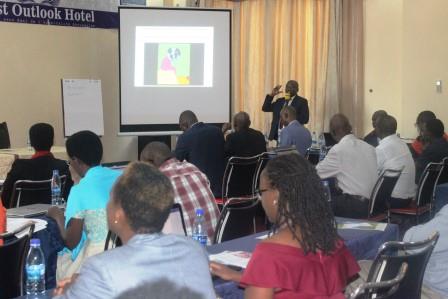 |
| Presentation by Mr. Longin NDAYIKEZA |
It was also explained that goods and services are essential for the sustainability of our well-being, as well as for future economic and social development. And that this was reflected in their various functions that they ensure, namely that of regulation, supply, and cultural.
It was reported that in Burundi, the following actions have already been carried out in terms of the valorization of ecosystem services:
- Study of the ecosystem services of protected areas in Burundi;
- Regulatory ecosystem services: Pollination
- Ecosystem goods: Fungi
The second presentation was made by Mr Fofo Alphonse and focused on the theme: “Ecosystem services: Case study at Kibira and Rusizi National Parks”.
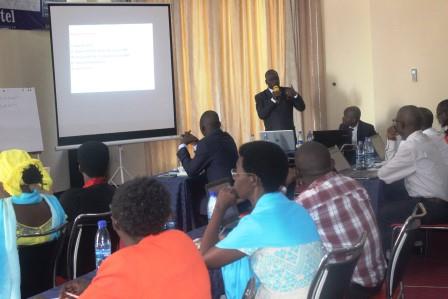 |
At the beginning of this presentation, the two national parks were briefly presented as well as their rich biodiversity, both flora and fauna. Then, the concept of ecosystem services was clarified by explaining that ecosystem services (ES) are benefits that people derive from ecosystems. SEs have traditionally been “free” but unfortunately they have not been incorporated into markets and as a result, they have generally been overlooked in economic decisions and tend to be “invisible.” It was pointed out that today, the main objective of the concept of ecosystem services is to recognize these benefits and to make them visible in order to promote the conservation of ecosystems. |
| Presentation by Mr Fofo Alphonse |
It was also deplored that in Burundi, knowledge about the economic valuation of ecosystem services remains limited.
Subsequently, it was a question of presenting the values of some ecosystem services of the Kibira and Rusizi National Parks that had already been estimated in the studies already carried out.
In the case of Kibira National Park, the ecosystem services studied concern the exploitation of bamboo and the exploitation of water in this park. In the case of bamboo, it was explained that its economic value is estimated from its various uses, including the covering of houses, the making of baskets, the construction of stables, the manufacture of furniture. For example, for the roofing function of houses, bamboo is the substitute material for sheet metal and therefore its economic value is estimated by reference to the price of sheet metal.
It has been shown that the Kibira National Park (PNK) is an essential water reservoir for agriculture and electricity production. And that a large part of the North and West region of Burundi is irrigated by water from the Kibira. The importance of this water, especially in rice farming in the Imbo plain, has been demonstrated. To make this clear, the results of an FAO report were summarily presented. These results revealed that rainfed rice production is 2.9 t/ha in Burundi (www.fao.org) and that it varies between 5-7 t/ha for the irrigated system (CAPAD). The yield gap is 2.1 t/ha while it is 4.1 t/ha if we consider the highest production (7 t/ha). The monetary expression of these differences corresponds to the value of water used per ha. Thus, after the calculation based on this yield gap, the total area of irrigated rice fields and the unit price of one kg of rice, the value of water and therefore of the service provided by the forest estimated between 4,907,322,000 Fbu and 9,580,962,000 Fbu.
With regard to electrical energy, it was pointed out that currently, the industrial sector is undoubtedly linked to the energy sector dominated mainly by the energy produced by hydroelectric dams, the most important in Burundi being the Rwegura dam using water from PNK.
In the case of Rusizi National Park, it was mentioned that its main ecosystem service is tourism for its cultural and aesthetic functions. The economic value of this ecosystem service was expressed in the revenue it generates. In 2018, tourism revenues in this park exceeded 25,000,000 fBu.
Other ecosystem services in Rusizi National Park, mainly those related to the supply function, were presented. These include the exploitation of phragmites, salt land, firewood, hyphaenes for various uses, various fish species,...
This presentation was concluded by pointing out that OBPE is experiencing a major shortfall in terms of valuing ecosystem services. Since in the PSE strategy, REGIDESO and OTB were identified as potential beneficiaries of SEs, but unfortunately, there is no legal framework binding both to pay SEs.
The third presentation made by Mr NDAYIKEZA Longin focused on the ecosystem services provided by pollinators. This presentation began by highlighting the effects of the destruction of natural environments by humans, thus disturbing the vital conditions of pollinating species. Therefore, it affects plants whose reproduction depends primarily on pollinators. It was explained that pollinators are vectors for plant reproduction and are the basis for the sustainability of these plants and the production of fruits.
In terms of valorization of services provided by pollinators, it was reported that various actions have already been initiated in Burundi. In this sense, it was reported that in Burundi there is already a research project on pollinating insects that was initiated by the late NZIGIDAHERA Benoit as part of a partnership between the OBPE and the Belgian Institute of Natural Sciences. Also, various research studies have been conducted by the OBPE in collaboration with other research institutions and in particular the University of Burundi and with the Association Protection of Natural Resources and for the Welfare of the Population (APRN /BEPB). In addition, it was reported that currently, there is a collection of 20,000 pollinator samples already identified at the laboratory of the Burundi Biodiversity Research Service. Also, some awareness-raising sessions have already been carried out with the local communities and precisely those bordering the Ruvubu National Park.
Finally, it was concluded that the ecosystem services provided by pollinators were enormous but that in Burundi there is still a long way to go to assess their economic values. Also, studies on pollinating species remain rare despite the efforts already made in this direction. In addition, the awareness of the various target groups remains at an embryonic stage, so there is a strong need in this sense to be able to make them aware of the importance of the ecosystem services provided by pollinators as well as their economic values. It was explained that in Burundi, our ancestors consumed indigenous bee honey, commonly called IMPURA, for a long time before the arrival of exotic species. The presence of these indigenous species has been observed in some natural ecosystems in Burundi. But that unfortunately, studies on their population in these ecosystems, their production have not yet been carried out.
The fourth presentation also made by Mr Longin NDAYIKEZA focused on the valorization of edible mushrooms from the open forests of Burundi. As an introduction, it was recalled that Burundi has a galloping population, which results in strong pressure on natural resources. This constitutes a major challenge in the sustainable management of these. However, the 2013-2020 National Biodiversity Strategy and Action Plan provides, in its strategic axis 4, for the valorization and sustainability of the benefits derived from biological diversity and the services provided by ecosystems. Its objective 15 states that by 2015, ecosystems that provide essential services, in particular water, fishery and forest resources, are restored, maintained and managed in order to ensure development systems and the well-being of women, local communities and the Batwa, poor and vulnerable populations, and the well-being of women, local communities and the Batwa people.
It was explained that the open forests of Burundi are dominated by species living in symbiosis with wild mushrooms. And that therefore, these forests constitute stocks of edible mushroom species, highly coveted by local communities but also sold on markets both locally and at the level of markets in Bujumbura. It was specified that there is a large mushroom market in Rumonge and that this market is dominated by women. Organizing this market for wild edible mushrooms would make it possible to develop the sector where all actors, the gatherer, the trader and the State, find benefits.
Various studies on the valorization of wild mushrooms from the forests of Burundi have already been carried out. These include:
- Studies on the productivity of wild edible mushrooms and associated traditional knowledge in open forests in Burundi. The results of these studies have shown that in Burundi, the production of these mushrooms reaches 5000 tons per year.
- A study on the harvesting, trade and consumption of mushrooms in Burundi.
- Try to restore denuded areas based on indigenous species in symbiosis with mushrooms.
Other activities on mushrooms have already been carried out, including the establishment of groups of mushroom collectors in the reserves of southern Burundi and the development of a business plan on the mushroom trade that requires improvement and operationalization.
In conclusion, it was shown that despite the activities already carried out on wild edible mushrooms, the field of action remains vast. And that in addition, in perspective, various actions are planned, in particular the production of artificial afforestation of trees that live in symbiosis with mushrooms, the training of groups established on the professional harvesting method and the modern method of conservation of mushrooms, the development of the mushroom sector in Burundi and the strengthening of the latter through external trade, and raising awareness of the economic value of ecosystem goods.
| Generally, through the various interventions, it was concluded that in Burundi, there is a great problem of reconciling the production and conservation of natural resources. Also, that there is a great need to raise awareness in order to be able to challenge all target groups on the values of ecosystem goods and services. A binding regulatory framework aimed at the preservation of ecosystem goods and services in all development projects should be put in place. | 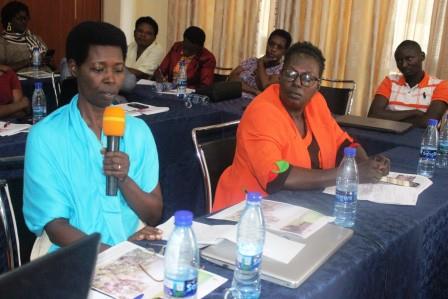
|
| Intervention by the Professor at the University of Burundi | |
 |
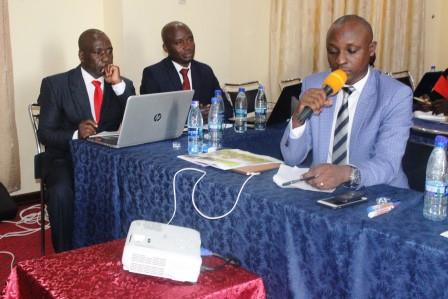 |
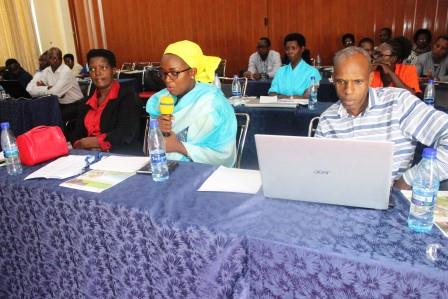
| Intervention by an Honourable Member of Parliament | Intervention of the Director of Environment and Climate Change |
It was also noted that there was a lack of national experts in economic value assessment, resulting in a strong need for training OBPE agents in this area. Collaboration between the OBPE and the various research institutions, in particular the University of Burundi, should be strengthened in order to identify all the ecosystem goods and services of Burundi's ecosystems and finally be able to assess their economic value.
The recommendations:
Before the end of the workshop, recommendations were made in relation to this day:
- development of an awareness-raising strategy on ecosystem services;
- Integrate the valorization of ecosystem goods and services into the action plan for landscape restoration;
- Organize awareness-raising sessions for all target groups;
- Conduct studies on the population, production and domestication of native ecosystem goods such as indigenous bees called “Impura”, a liana called rotang “Urugage”, etc.;
- Conduct a study on the economic valuation of SEs provided by the main natural ecosystems and their potential beneficiaries;
- Strengthen the capacities of certain officials of the Ministry in charge of the Environment on the economic evaluation of SEs;
- Establish new legal provisions to facilitate the redistribution of resources between public entities in order to promote the conservation of SEs;
- Conduct consultations with SE beneficiaries on the control system, access and use of ES;
- Establish a collaborative institutional framework for the management of resources from ES;
- Mobilize internal and external financial resources to conduct the necessary studies and consultation processes between SE suppliers and beneficiaries.
- Apply the “withholder-pays” principle of article 2 of the 2012 Water Code.
The Director General of OBPE closed the meeting with these words: “Everyone should participate in the change in environmental conservation because by destroying it you destroy yourself but by maintaining it you are also preserving it”. Finally, he thanked all the participants for their attention shown through the various interventions and the Belgian Institute of Natural Sciences having supported this activity and various activities in the field of biodiversity research in Burundi.