
Basic Page
Basic Page
Published on
2020 Jan 13Establishment of the reference situation for monitoring the dynamics of habitats in the Rusizi National Park: Case of the Palmeraie sector
The present study took place in the Palmeraie sector located north of the Rusizi National Park (PNR). The vegetation of the Palm Grove Sector is marked by the presence of Hyphaene petersiana, a wild palm tree from the Rusizi plain. The Hyphaene petersiana forest is by far the most spectacular association in the plain, if not all of Burundi. This palm is often combined with many other plants, forming xerophilous groves. The latter are often composed of Cadaba farinosa var. adenotricha and Commiphora madagascariensis and are mainly found at the level of the two upper fluvial terraces of the Rusizi. The Palm Grove Sector also includes aquatic and semi-aquatic formations on land that is almost permanently waterlogged along the Rusizi and Kajeke Rivers. Other plant formations include savannas with Sporobolus pyramidalis and Balanites aegyptiaca, characteristic of vertisols, which are amphibious formations. Acacia formations are also found in the south of the Palm Grove Sector.
The present research was carried out by:
NGENDAKUMANA Jean Claude
Under the supervision of:
- Mr. Benoît NZIGIDAHERA, Biodiversity Research Manager at the National Institute for Environment and Nature Conservation (INECN) and
- Prof. Bernadette HABONIMANA, Professor at the University of Burundi, Faculty of Agronomy and Bio-Engineering (FABI), Department of Environmental Management and Ecology.
 |
The present research was carried out in order to set up reference data for monitoring the dynamics of the habitats of this part of the Rusizi National Park. To achieve this, several steps are taken. | 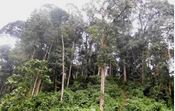 |
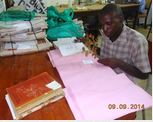
The research work began with the establishment of an ecological trail (transect) and samples were collected following it. in sites selected on the established ecological trail and in a systematic manner in order to make the results of the research reliable. Each site has been subdivided into 1 m by 1 m dials. And all species were collected dial by dial and stratum by stratum. The taxonomic determination was carried out in the laboratory and documents containing taxonomic keys were used. At the end of this work, quite a few plant species have been identified and the study will make it possible to establish a reference situation in order to monitor the dynamics of the habitats of this park.