
Basic Page
Basic Page
Published on
2020 Jan 13Establishment of the reference situation for monitoring the dynamics of habitats in the Kibira National Park
It is financed as part of the partnership between Belgium and Burundi under the Convention on Biodiversity, through the IMAB program of the Royal Institute of Natural Sciences of Belgium and aims to establish a reference situation for monitoring the dynamics of habitats in 4 sectors of the National Parks of Kibira, Rusizi and Ruvubu. The activities of this project are supervised by Mr. Nzigidahera Benoît (Biodiversity Research Manager at INECN) and Ms. Professor Habonimana Bernadette (University of Burundi, Faculty of Agronomy and Bio-Engineering (FABI), Department of Environmental Management and Ecology (FABI), Department of Environmental Management and Ecology and are carried out in close collaboration with park managers, sector managers, forest rangers as well as four student researchers from the University of Burundi
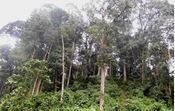
Kibira National Park is located in the North-West of the country, on the Congo-Nile ridge. It is mainly composed of mountain rainforest and is a well-watered area. Its area is estimated at around 40,000 ha. The Mabayi, Musigati and Teza sectors were concerned by the study.
 |
In this sector mentioned above, data collection was carried out in selected sites on an established transect. The area of the sites varied according to the homogeneity of the vegetation. For the inventory of floristic species, a collection of all plant species present in the study sites was carried out. To conduct this harvest systematically, each site was subdivided into dials of 1 m by 1 m and subsequently, all the species were collected dial by dial and stratum by stratum from top to bottom. |  |
| NDACAYISENGA Prosper, University student |
The taxonomic determination was carried out in the laboratory and documents containing taxonomic keys were used. The study provided basic data to monitor the dynamics of the habitats of the above-mentioned park.
2. Case of the Musigati sector
 |
The present study was carried out in the Musigati sector, one of the 4 sectors of the Kibira National Park (PNK). As in the previous case, the specimens were collected, each site in turn was subdivided into dials measuring 1 m by 1 m. Then, all species in the delineated area were collected dial by dial and stratum by stratum beginning with the upper stratum. The taxonomic determination was carried out in the INECN laboratory and documents containing taxonomic keys were used. At the end of the work, quite a few plant species have been determined and identified. The data from this study will make it possible to establish a reference situation in order to monitor the dynamics of the habitats of the ecosystem concerned by the research. |
| NIMENYA Innocent, student at the University of Burundi |
3. Case of the Teza sector
This research was carried out in the Teza sector of Kibira National Park. It was carried out in order to set up reference data to allow the monitoring of the dynamics of habitats in order to preserve biodiversity. This work was carried out by NZOYISABA Désiré, a student at the University of Burundi and doing this research at the National Institute for the Environment and Nature Conservation.
Each plot was subdivided into equal dials of 10 m by 10 m, each dial being in turn subdivided into 100 equal tiles of 1 m by 1 m to facilitate inventory. The latter was carried out systematically tile by tile and layer by layer beginning with the upper stratum. After collecting the samples, taxonomic identification work followed in the laboratory. Documents with floristic information were consulted to determine the different plant species collected. Quite a few species have been identified and the results obtained so far are satisfactory.