
Basic Page
Basic Page
Published on
2020 Jan 14Study of the valorization of non-wood forest products: Productivity of edible mushrooms in open forests in Burundi, Case of the Gisagara Protected Landscape
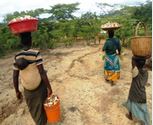 |
The National Institute for Environment and Nature Conservation The open forests of Burundi constitute an important ecosystem where the population draws on mushrooms, foods rich in proteins in a country where the diet is often deficient in this food group. |
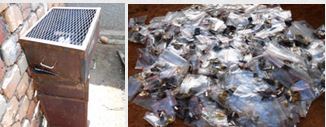
Mushrooms are among the non-wood forest products that Burundians use as a very important side product in their meals. During the study, mushrooms were collected in plots measuring 30m by 30m. The collected specimens were weighed, photographed and described, dried and preserved for later studies.
 |
Visits and surveys within riparian households were also carried out in order to ascertain the ethnomycological knowledge of the population living near these forests. | 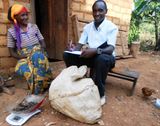 |
The only reliable guide to mushroom edibility is knowing someone who has consumed a particular type and survived. So far, quite a few specimens have been collected and identified. This study is carried out by:
NIZIGIYIMANA Reverine
Under the direction of:
Mr. NZIGIDAHERA Benoit and M.Sc NIYUKURI Jonathan