
Basic Page
Basic Page
Published on
2020 Jan 15Pollinator research activities
Ongoing pollinator research activities started in May 2016. These activities include sample collection, pinning, and identification. They are made by Msc. NDAYIKEZA Longin, researcher on pollinating insects at the Burundian Office for Environmental Protection (OBPE) under the funding of the Royal Belgian Institute of Natural Sciences (IRSCnb).
1. Sample collection
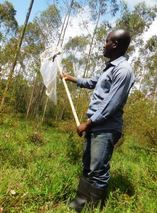 |
The collection is done in the Kibira National Park in the Rwegura and Teza sectors, in the Ruvubu National Park in the sectors Right Bank I (Muremera) and Left Bank I (Gasave). There is also the Rusizi National Park in the Palmeraie and Delta sectors. For each sector, samples are collected in natural environments and its coastal agricultural environments. At these natural and agricultural environments, samples are also collected in urban and peri-urban areas of Bujumbura; at the Bujumbura public garden, at the courtyard and botanical garden of the University of Burundi, and in Kajaga. | 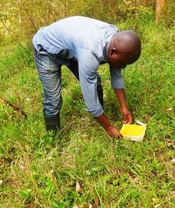 |
In fact, these samples are collected using entomological nets and traps with yellow jars. The samples are then placed in a jar containing alcohol and a label on which is marked the location, date, host plant and the name of the collector.
2. Sample pinning
 |
Preservation starts with preparing these samples to select the best quality ones. After preparation, the samples are pinned with appropriate pins. Then, follow the microscopy work to separate bees and non-bees and finally, to do the taxonomy of bees. | 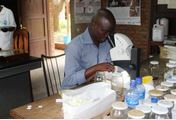 |
The latter are identified, some down to the species, others to the genus or even to the family by hearing a visit to the Royal Institute of Natural Sciences of Belgium (IRSNB) to consult a specialist from this institute.