
Basic Page
Basic Page
Published on
2020 Jan 16Establishment of the reference situation in order to monitor the dynamics of habitats in protected areas in Burundi: Case of the Right Bank I of the Ruvubu National Park
is located in the east of the country and covers 50,800 ha. The park includes wooded savannas with Parinari curatellifolia (about 7620 ha), shrub and tree savannas with Parinari curatellifolia, Pericopsis angolensis and Hymenocardia acida (about 38175 ha), grassy savannas with 4072 ha. There are also forest galleries whose area is estimated at 1018 ha. There are also swamps with Cyperus papyrus and other Cyperaceae which occupy about 3299 ha. The specific objective pursued was to define and characterize the vegetation throughout the transect established in the present research. The work consisted in inventorying and collecting the various plant species along the established ecological trail. This study was carried out by:
NIYONGABO Elias
Under the supervision of:
- Mr. Benoît NZIGIDAHERA, Biodiversity Research Manager at the National Institute for Environment and Nature Conservation (INECN)
- Prof. Bernadette HABONIMANA, Professor at the University of Burundi, Faculty of Agronomy and Bio-Engineering (FABI), Department of Environmental Management and Ecology.
 |
The transect method was used. It made it possible to sample plant species in order to constitute reference data for monitoring the dynamics of the habitats of said park. The established transect will also serve as an ecological trail for diversified ecological studies. Along the transect mentioned above, various sampling sites were delimited taking into account the variation in vegetation. | 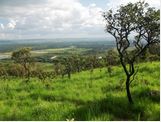 |
Samples were collected at the sites, layer by layer, from top to bottom. Tree heights and circumferences were measured during the study. Several scientific manuals were used for the taxonomic identification of harvested plant species and several methods were used to analyze the results obtained during the study. At the end of the study, several plant species were collected and identified and the results of the study provided basic data for monitoring habitat dynamics.