
Basic Page
Basic Page
Published on
2020 Jan 16Inventory of Tephritidae infesting cultivated plants
In Burundi, fruits are a source of income for farmers. Unfortunately, they are the target of insect attacks making them unsuitable for consumption and marketing. In order to identify insects that infest wild and cultivated plants, a series of studies was carried out by Mr. NDAYIZEYE Liévin, researcher in entomology at the Burundian Office for Environmental Protection (OBPE). These studies involved guava, orange, African eggplant, and mandarin. Note that this research is part of the research project on the systematic and ecological study of fruit flies initiated by the OBPE and the Royal Museum for Central Africa in Tervuren.
These studies took place respectively:
- In the month of May (
- in the town MUKAZA (Jabe site) from April to May 2017 for oranges;
mandarins;
- in 19 sites selected in the 5 agro-ecological regions of the country, namely the Imbo plain, the western slope of the Congo-Nile Ridge, the Congo-Nile Ridge, the Central Plateaux and the North-East Depressions for eggplants.
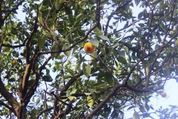 |
The ripe fruits with insect bites were collected at the various harvesting sites and then transported to the OBPE biodiversity research laboratory. | 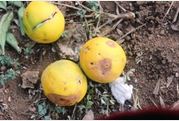 |
 |
In the laboratory, the fruits were first counted, washed and weighed. Then they were placed in plastic boxes containing sifted fine sand. Regular monitoring has been carried out to detect any insects that emerge from the incubated fruits. | 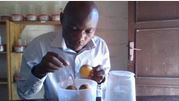 |
The insects that emerged were captured and preserved in 70% alcohol. Each bottle containing specimens already identified had two labels. The first tag bore the name of the species, the name of the person who identified it, and the year of identification. On the second label were written the name of the collection site, the host plant and the date of emergence.
 |
The specimens were identified using a LEICA EZ4HD stereo microscope and an identification key. Some specimens were sent to the Royal Museum for Central Africa in Tervuren to confirm the species previously identified at the OBPE and for the conservation of these species. |
Finally, all the bottles containing the identified species were grouped species by species and then stored in large bottles bearing the names of the species concerned.
All this research has shown us that cultivated plants are heavily infested by fruit flies and this is an obstacle to the development of the Burundian horticultural sector. Most of these species of fruit flies have already invaded all of Burundi. It is necessary to conduct in-depth studies in order to:
-know the alternative host plants of these species;
-monitor the dynamics of these species in horticultural agroecosystems;
-know the seasonality of exotic species already identified in Burundi;
-engage in an integrated fight against these fruit flies.
In conclusion, Burundi is home to many species of fruit flies, both indigenous and exotic. Exotic species are dangerous pests of fruits and vegetables all over the world.