News
News
Published on
2020 Feb 15Workshop to raise awareness among target groups on the Nagoya Protocol on Access and Sharing of Benefits from the Use of Genetic Resources
On February 04, 2020, a workshop was held at the Hotel Best Outlook Hotel to raise awareness among target groups on the Nagoya Protocol on Access and Sharing of Benefits arising from the use of genetic resources, within the framework of a research program, information exchange, awareness-raising and conservation of biodiversity.
Were present:
Permanent Secretary, Representative of the Minister of the Environment, Agriculture and Livestock, Director General of the Burundian Office for Environmental Protection (OBPE), members of the APA National Committee, traditional practitioners, doctors, professors of university institutions, professors of university institutions, directors and representatives of university institutions, directors and representatives of non-governmental organizations, directors and representatives of non-governmental organizations and various agents of OBPE and other institutions, representatives of traditional practitioners and journalists.
Welcome word
welcomed the participants warmly and thanked them for having responded to the invitation to take part in this workshop. Introductively, he emphasized that Burundi has genetic resources that can trigger sustainable development. However, that there are still no formal mechanisms for sharing the benefits arising from the use of these resources and associated knowledge supported by law and that there is a lack of technology transfer related to the use of genetic resources from Burundi. In this situation, foreign firms continue, without proportionate compensation, to exploit Burundi's genetic resources to extract molecules useful for modern medicine and cosmetics.
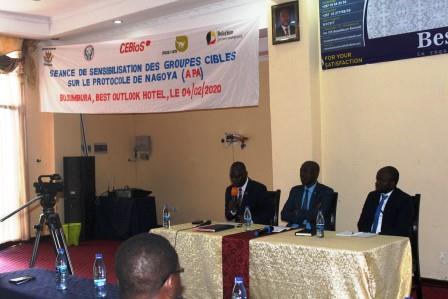 |
The contributions of all participants in the workshop were very much needed and he invited them to get involved strongly and effectively so that he could |
| Welcome speech by the CEO of OBPE |
Finally, he thanked all the participants who responded to the invitation, the partners and collaborators who continue to support OBPE in its mission to ensure the implementation of the obligations arising from the International Conventions and Agreements relating to the environment and biodiversity to which Burundi is a party.
Workshop opening speech
The opening speech of the workshop was delivered by Permanent Secretary, Representative of the Minister of Environment, Agriculture and Livestock. The latter began by showing that it was an honor and a real pleasure to proceed with the solemn opening of this workshop.
He took the opportunity to wish the participants all the best and thank them again for having temporarily interrupted their daily activities to respond to the invitation to participate in this workshop, which shows the interest they attach to the biodiversity of Burundi. He explained that this workshop, which would last only one day, was organized as part of the program of research, information exchange, awareness-raising and conservation of biodiversity established as part of the partnership between OBPE and IRSCnb.
He added that this workshop aims to exchange information on the Nagoya Protocol on access and the fair and equitable sharing of benefits arising from the use of genetic resources, its implementation and its socio-economic importance.
| He explained that genetic resources are of great socio-economic importance that can contribute to the sustainable development of the country. However, these resources are exported without the benefits arising from their use being shared equitably by the various target groups. Thus, the Nagoya Protocol, adopted in 2010 in Japan and ratified by Burundi in 2014, aims to establish a legal framework that binds the use of these resources without all target groups benefiting equitably and that the country holding these resources is compensated proportionally. | 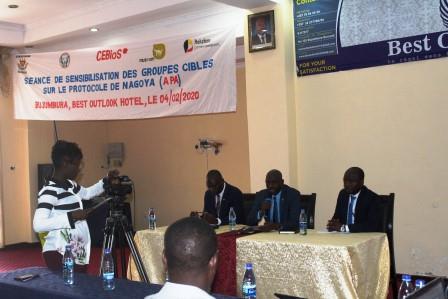 |
| Opening remarks of the workshop by the Permanent Secretary, Representative of the Minister of Environment, Agriculture and Livestock |
He then invited the participants to follow with interest the various presentations that present the state of play on the implementation of the Nagoya Protocol, the achievements and challenges and the importance of traditional medicine. And therefore, give their contributions, commitments and recommendations to establish the conservation and sustainable management of our biodiversity and the sharing of benefits arising from the use of genetic resources.
After the opening remarks of the Permanent Secretary, various presentations on the Nagoya Protocol, Access and Sharing of Benefits arising from the use of genetic resources in Burundi and the importance of traditional medicine followed.
The first presentation made by Mr Onesphore MASABO was on the theme: “Progress made by Burundi in the implementation of the Nagoya Protocol on ABS”
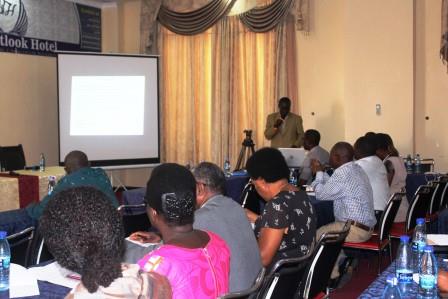 |
At the beginning of this presentation, it was noted that the status of implementation of the Nagoya Protocol in Burundi was still in its infancy. This is due to the fact that the country is experiencing a lack of capacity in ABS, a lack of a law requiring the export of genetic resources. However, some actions have already been carried out as part of the implementation of this protocol. It was pointed out that there are firms that export genetic resources from Burundi and that earn a lot without the country finding proportionate compensation. |
| Presentation by Onesphore MASABO |
Recognizing this shortfall, Burundi ratified the Nagoya Protocol in 2014. Thus, with limited resources, some actions have been carried out, including awareness-raising through stakeholder workshops, the development of policy documents and action plans, establishment of the National APA Committee, strategic frameworks for access and the sharing of benefits arising from the use of genetic resources.
According to the presenter, the challenges to implementing the Nagoya Protocol in Burundi are numerous but mainly the following:
- the lack of an institutional, regulatory and legal framework for the deployment of APAs;
- the lack of a database on stocks and the real values of local genetic resources;
- the lack of national capacities so that actors are equipped to develop win-win partnerships on APA;
- the lack of technical, human, institutional, material and financial capacities to effectively implement the principles of the Nagoya Protocol on ABS;
- The lack of pilot benefit-sharing operations actions to initiate actors to conduct a process of negotiation and operationalization of APAs.
To face these challenges, he added that in Burundi, there is a great need for capacity building in terms of equipment and infrastructure, human resources and trained experts from all target groups on ABS regulations but also in strengthening financial capacities.
He also noted that opportunities for collaboration with researchers and the private sector should be created. This collaboration requires the establishment of platforms collaborating with the APA National Committee to benefit from results that reconcile research programs and the implementation of APA procedures in the country.
Before concluding the first presentation, perspectives from Burundi aimed at implementing the Nagoya Protocol were presented. These include:
- Make pleas for Burundi to endorse existing funding, in particular to the GEF, to establish the APA process in Burundi
- Participate in trainings on the Nagoya Protocol organized by the Convention on Biological Diversity
- Adhere to COMIFAC's policy on ABS, in particular by facilitating the mobilization of existing collaborative frameworks or to be created within a bilateral and multilateral framework,
- the existence of the African Union's practical guidelines for the coordinated implementation of the Nagoya Protocol in Africa.
The second presentation, also made by Mr. Onesphore MASABO, focused on the theme: “Raising awareness among stakeholders on the Nagoya Protocol implementation process”.
At the beginning of this presentation, it was noted that the Nagoya Protocol is a measure to implement one of the four objectives of the Convention on Biological Diversity (CBD) that provides legal certainty and transparency for providers and users of genetic resources.
And he added that implementing the Nagoya Protocol is a complex process given that:
- the APA is carried out at various levels, which involve a large number of areas of expertise and with a great diversity of stakeholders;
- the APA covers various sectors and markets including agriculture, horticulture, pharmaceutical products, etc.;
- the APA is interdependent on other international agreements;
- and APA is not a project with clear time or space limits. It is therefore a process of socio-political negotiation.
Also, the presenter ended his presentation by stressing that the successful implementation of the APA principles requires the implementation of a multitude of actions, namely:
- Establishing a valorization strategy: The aim is to establish priorities and approaches to translate the economic potential of APA into real values. it is also a question of planning and promoting research activities and investments if the potential of ABS is to be exploited and countries are expected to become proactive drivers of their own ABS future.
- Ratification of the Nagoya Protocol. This action consists in the formal consent of the competent institutions of a State in decision-making (Law No. 1/21 of 23 June 2014 for Burundi)
- Definition of general APA policies/strategies. This implies that when it comes to ABS, each country makes its own strategic choices regarding the general policy direction, the nature of the regulatory system, the structure of the licensing system and the way in which checkpoints operate, etc.
Establishment of national ABS regulations: this means that the Nagoya Protocol assigns an important role to national ABS measures and to the need to harmonize laws or regulatory requirements with the Protocol. Hence, the strategic APA approach adopted at the national level must be transposed to national regulations and/or laws.
- Establishment of institutional mechanisms: This involves mandating or creating national institutions that will assume a leading role in the Nagoya Protocol and will be responsible for its implementation.
- Consideration of traditional knowledge: This involves defining the procedures and rules for accessing traditional knowledge in order to protect the rights of indigenous peoples and local communities (IPLCs) and to ensure the equitable sharing of benefits.
- Addressing transboundary issues: There is a need to ensure the coordination and regional harmonization of ABS approaches that promote synergies between the neighbouring countries concerned and prevent regional conflicts, e.g. over divergent rules and regulations to grant access to genetic resources.
- Stakeholder involvement: Stakeholder involvement is transversal to all other fields. The aim is to ensure adequate participation and cooperation with the relevant stakeholder groups.
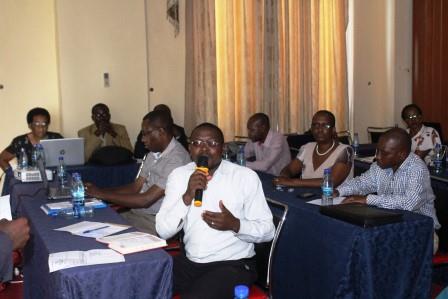
After these two presentations, he followed a question and comment session from the various workshop participants.
Speakers expressed concern about the funding available but not yet released, which goes hand in hand with the lack of infrastructure and equipment for the implementation of the Nagoya Protocol in Burundi. They suggested making a plea to the competent authorities so that this situation could be resolved.
They also called on the APA National Committee to redeploy its efforts to be able to find out what is wrong.
Speakers questioned whether lawsuits should not be initiated against firms exploiting genetic resources in Burundi without the latter benefiting from them. In relation to this, it was explained that these firms do not transgress any law since the APA law does not exist so far in Burundi.
Speakers also asked what Burundi has already gained since the ratification of the Nagoya Protocol from an economic point of view. In relation to this, it was noted that until now the country has not benefited from the economic interests resulting from the ratification of this protocol. However, thanks to this protocol, a law would be in the process of being drawn up on the management of biological resources of socio-economic interest.
Speakers also questioned whether it would not be possible to put in place a Presidential Decree regulating the export of genetic resources while waiting for the ABS laws to be enacted. In relation to this, it was explained that the establishment of a Presidential Decree is a long process. Nevertheless, it was recalled that since 2016, a memorandum of collaboration between stakeholders has been signed at the level of technicians (Traditionalists and Researchers) and that it has been submitted to decision-makers for signature but to no avail so far. However, this memorandum is a tool that would facilitate the implementation of the Nagoya Protocol pending the enactment of related laws.
 |
 |
 |
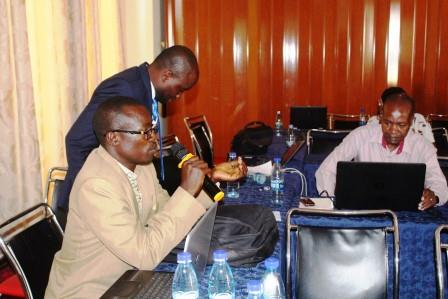 |
Different interventions by the two presentations on the Nagoya Protocol
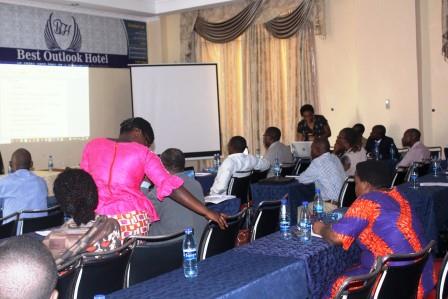
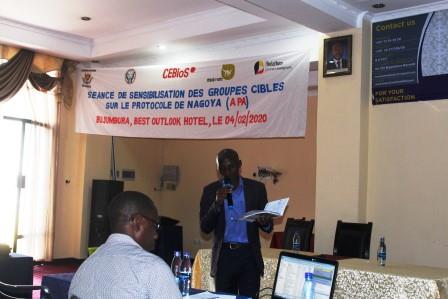
After the discussions around the two presentations, a third presentation followed. The latter focused on the theme “Importance of traditional medicine and associated knowledge in Burundi”. It was presented by Professor Marie Josée BIGENDAKO, researcher at the University of Burundi and President of the APA National Committee.
 |
The presenter started by defining what traditional medicine is. Health insurance is defined, according to the WHO, as the total sum of knowledge, skills and practices, explainable or not, that are based on theories, beliefs and experiences specific to a culture and that are used to maintain human beings in good health as well as to prevent, diagnose, treat and cure physical, mental or social diseases that are based on the experiences or observations of the past transmitted from generation to generation orally or in writing. |
| Presentation by Madame Professor Marie Josée BIGENDAKO |
After this definition of traditional medicine, she pointed out that this medicine exists under its various practices but that the presentation in particular was going to be limited to that dealing with the somatic aspect (Phytotherapy), therefore that using medicinal plants and therefore Phytotherapy, which is the most practiced in Burundi.
She explained that traditional medicine has been used for thousands of years and that practitioners of this medicine have contributed a lot to human health. She added that this medicine is not a matter for poor countries, developing countries, but also that developed countries also use it. According to the presenter, in Africa, traditional medicine is a common practice where 70-80% of the population opts for traditional medicine or traditional pharmacopoeia for primary health care.
In Burundi, as everywhere in developing countries, long before the introduction of modern medicine, there was a very widespread traditional therapist who had a profession known and respected by almost the entire population. The practice of this traditional medicine had and until today has medicinal plants as its basic instrument. The presenter added that the introduction of modern medicine in Burundi did not overtake traditional medicine. Thus, in some regions of the country, traditional practitioners today maintain a monopoly despite the presence of modern medicine. She explained that the lack of essential medicines, high drug prices, inadequate health care, and social habits justify the use of traditional medicine.
Burundian healers are currently organized into associations such as the Association of Healers of Burundi, Associations of Traditional Practitioners of Burundi (ATRABU), the Association la Source,... recognized by the Ministry of Public Health and the Fight against AIDS. The latter, in collaboration with traditional practitioners, developed a strategy document for the development of traditional medicine. Also, in 2016 a decree, regulating traditional medicine, was put in place.
According to the presenter, in Burundi, traditional medicine mainly uses medicinal plants. And the results of ethnobotanical surveys on these plants have made it possible to draw up a list of 938 species treating diseases related to the digestive tract, skin diseases,... She added that this list remains not exhaustive since there are still plants that remain unidentified up to the species level. However, she deplored that in Burundi few species of medicinal plants have been the subject of in-depth studies to be able to demonstrate their effectiveness. Nevertheless, some medicinal plants used in Burundi, having been studied elsewhere, have proven their effectiveness. These species include Bidens pilosa, Neorautanania mitis, Vernonia amygdalina, Vernonia amygdalina, Lantana trifolia, Ageratum conoides, Euphorbia hirta, Cassia occidentalis,... She said that these species are among the most frequent in Burundi, and can generate revenue in the country.
The presenter also recalled that there are still challenges facing traditional medicine in Burundi. These include the memorandum of understanding between traditional practitioners and other stakeholders, whose signing process started in 2016 and unfortunately did not go through to the end. In addition, she pointed out that financial resources remain a limiting factor in order to be able to conduct in-depth studies, at the University of Burundi, on medicinal plants.
In conclusion, the presenter said that traditional medicine is still a little-explored cultural heritage and that its potentialities and possibilities need to be studied. She added that traditional knowledge is a key contribution to the sustainable development of this traditional medicine.
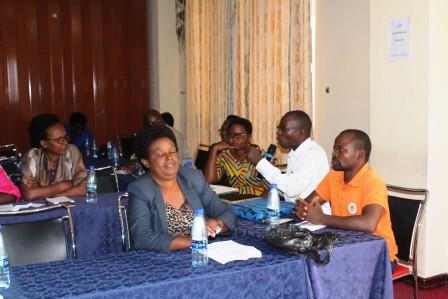
After following this presentation, discussions about it followed. Stakeholders questioned whether it would be interesting to publish and recommend effective species based on traditional knowledge before comprehensive studies were possible. In relation to this, it was explained that only research must demonstrate with certainty the effectiveness of medicinal plants and determine their doses, otherwise it would represent a danger to public health and the well-being of the population.
Some speakers questioned whether it would still be relevant to prove the effectiveness of traditional medicine given that it is already used by a considerable part of the population. In relation to this, they were convinced that even modern medicine has limitations that research aimed at improving it is still being carried out. Stakeholders understood that only research could determine the doses of traditional medications prior to use.
 |
 |
 |
 |
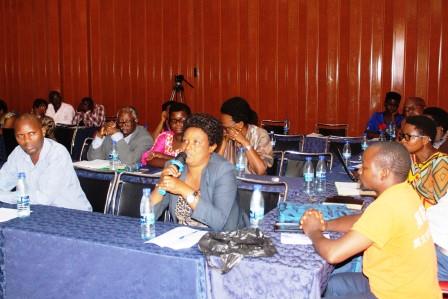
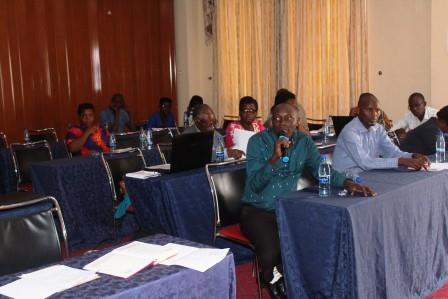
Different interventions on traditional medicine
After the discussion on the last presentation, recommendations were formulated in relation to the various presentations of the day and to the various interventions. These recommendations were formulated as follows:
- Trigger advocacy with the GEF Focal Point in order to release the funds allocated to Burundi to establish the Nagoya Protocol;
- Make a note to the relevant stakeholders to trigger advocacy on the APA funds allocated and the signing of the memorandum;
- Set up a delegation responsible for pleading with the minister responsible for health in his responsibilities so that the memorandum blocked at his level until now is signed;
- Update the memorandum, before it is signed, taking into account the reorganization of the various ministries that occurred after the year 2016;
- Strengthen subregional, regional and international cooperation in the area of research on ABS;
- Strengthen allocations related to research on medicinal plants and the implementation of the Nagoya Protocol;
- Establish an action plan for ABS activities.
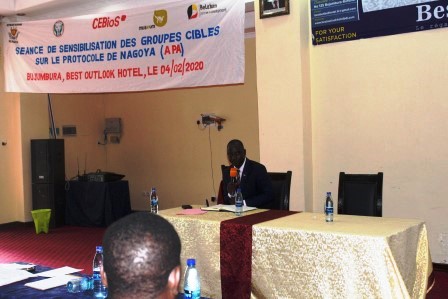 |
After the formulation of the recommendations, the CEO of OBPE intervened by stressing that discussions would be initiated between his management and the GEF focal point in order to clarify the question on the share of FAR funds allocated to the Nagoya Protocol and to be able to endorse them for this purpose. She also promised involvement in improving regional and international cooperation in research related to APA. At the national level, he noted that OBPE's collaboration with other research institutions is being strengthened in order to analyze the status of species that were of great use in ancient times and to study the possibilities for their restoration. This will undoubtedly make it possible to further enhance the value of medicinal plants. |
| Interventions and closing of the workshop by the CEO of OBPE |
The CEO of OBPE closed the meeting with these words to all the participants for their attention shown through the various interventions and the Belgian Institute of Natural Sciences having supported this activity and various activities in the field of biodiversity research in Burundi.