
Basic Page
Basic Page
Published on
2020 Mar 03Report on field visits to the biodiversity reference library and to Ruvubu National Park
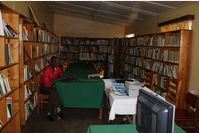 |
On 13-14 April 2018, the Focal Point of the CHM-Belge and the coordinator of the CEBios program, together with the Director of Forests of the Burundian Office for Environmental Protection (OBPE) and some executives from the OBPE Biodiversity Research Service, carried out a field visit to the Gitega biodiversity reference library and to the Ruvubu National Park in order to assess the activities carried out in the program. 2014-2018. | 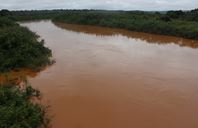 |
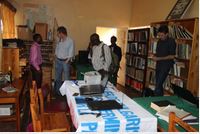 |
During this visit, the Chief Librarian spoke about the activities already carried out, namely the cataloging of books, the digitization of maps and the lamination of maps for better preservation. She said that the number of visitors to the library is increasing and that they come from the Faculty of Agronomy and Bioengineering (FABI-Gitega Campus) and the Faculty of Environmental Sciences of the Polytechnic University of Gitega. She did not fail to point out that this library has more than 10,000 books and that there is a shortage of library staff. |
This short presentation by the librarian was followed by a presentation by the library consultant hired to train library staff in 2017. He first talked about the objective of the training, which was to make the cartography library autonomous. Thus, he said, many maps have been digitized and they are still posted on the CHM-Burundian website. During this presentation, he mentioned the prospects for the future, namely:
- data storage on flash disk;
- keeping cards flat in appropriate cabinets;
- the expansion of the library due to the increase in the number of visitors;
- the creation of a paid internet cyber café to complete the documentation;
- the retraining of librarians;
- the establishment of a paid photocopier in the library;
- the preparation of library files that meet international standards because existing ones are poorly designed;
- the purchase of bookends to ensure the good conservation of books.
| After this interview, it was found that the books are poorly preserved and that cataloging has not been continued, which may interfere with the operation of this library. The Focal Point of the CHM-Belgium, Mr. Han de Koeijer, gave some advice to the head librarian to ensure the proper functioning of the library, namely the continuation of the cataloging of books and the good conservation of books to avoid them being damaged very early. | 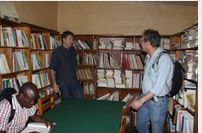 |
During this visit, recommendations were issued by the Focal Point of the CHM-Belgium, Mr. Han de Koeijer. These include:
- continue cataloging books;
- Make a list of new book purchases and send it to nearby libraries;
- download the WINISIS software to facilitate cataloging;
- send some information related to the library to the attaché at the CHM-Burundians to be posted on the site;
- produce monthly activity reports and send them to Mr. MASABO Onesphore, ABS-CH National Focal Point.
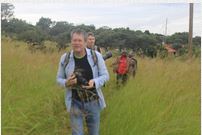
This visit continued in Ruvubu National Park where they were welcomed by Park officials in their offices. The head of surveillance Mr., BUVYIRUKE Evariste gave a presentation on the history of the park while mentioning its wealth of fauna and flora which gives it its tourist attraction. This presentation was followed by the descent into the park to see the buffaloes.
 |
The next day, another visit was made to the Park in the MUREMERA sector where explanations were given on the fires in the park used to manage the fauna of this park. | 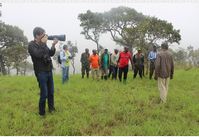 |
These fires allow the regeneration of the grass and make it possible to maintain the populations of buffalo and antelopes and other mammals in the park, thus avoiding their effect on the crop fields of the populations living near the Park. The OBPE Forest Director invited park officials to often give information to the public to remove their concerns about the harmful effect of fires, especially on entomofauna and the environment in general.