Protected Area
Protected Area
Published on
2020 Mar 30Northern Protected Water Landscape
The Northern Protected Aquatic Landscape is located in the natural region of Bugesera in the extreme north of the country. It corresponds almost to the entire province of Kirundo.
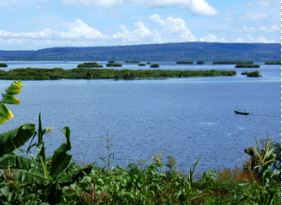 |
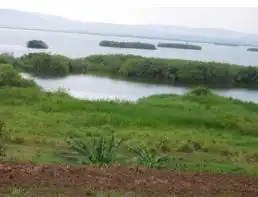
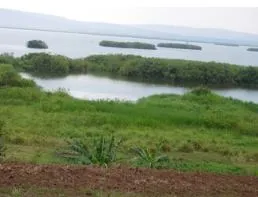
With an area of 16,242 ha, the Northern Protected Aquatic Landscape covers Lakes Rweru, Kanzigiri, Cohoha, Gacamirindi, Rwihinda, Nagitamo, Narungazi, Mwangere and the Murehe Natural Forest located in the municipality of Busoni with 3O75 ha. The natural vegetation composed of Cyperus papyrus swamps is observed in the east in the swamps connecting the lake to the Kanyaru River. | 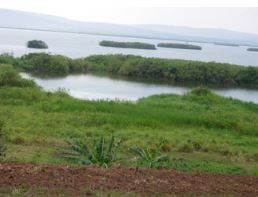 |
Floating plants are essentially dominated by Nymphaea div. sp. and Potamogeton. From the point of view of fauna, Lake Rwihinda, also called “bird lake”, is characterized, like the Rusizi Park, by the presence of both migratory and sedentary birds. A list of more than 49 species, which is far from being exhaustive, is drawn up with remarkable elements such as Pelecanus rufescens, Phalacrocorax africanus, Dendrocygna viduata, etc. The other faunistic groups remain to be studied. Biological richness is not well known.
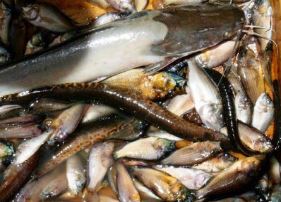 |
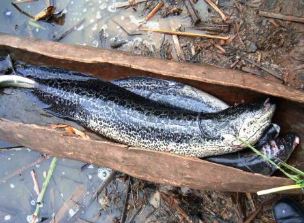
Nevertheless, Cohoha and Rweru lakes are rich in phytoplankton and zooplankton and 18 fish species are known. Their conservation is necessary to allow the sustainable use of ichthyological resources. Icical, |
 |
In the North of the country, the marshes dominated by Cyperus papyrus slow the flow of water under the floating papyrus carpet and therefore reduce the supply of alluvium and allow lakes and rivers to maintain themselves at a higher level, and thus to survive during dry periods. In this region, the marshes contribute to the mitigation of the severity of the climate characterized by the most pronounced aridity in the country.
These marshes provide essential conditions for the perpetuation of a great diversity of plant and animal species. They provide vital conditions for Tragelaphus spekei, a swamp antelope threatened all over the country by the destruction of its biotopes. In contact with rivers and lakes, marshes are important transition areas for amphibians and spawning grounds for fish. Marshes provide plant production that can be exploited for various socio-economic uses or usable for breeding. Lakes like Rwihinda and Narungazi provide essential functions for birdlife nationally, regionally and even internationally. They form an ornithologically important biotope, a site of rest, reproduction and passage for many migratory species. They also host a rich ichytyological fauna that is of paramount importance in the socio-economic life of the population. The combination of lake depressions and hills create landscapes that offer recreational and tourist opportunities compatible with the usual lifestyle and economic activities of the inhabitants.
Also, a natural forest like that of Murehe, which covers a significant area, must play an essential role in terrestrial ecology. The important roles of this forest are the improvement and reconstruction of soils, the hydrological regulation and protection of the soils in the watersheds of Lakes Rweru and Cohoha and the conservation of animal species. Although fragmented on the various hills, the still compact part of Yanza gives hope for an area that in the very near future could form a large area covered by about 3000 ha. The Murehe ecosystem with the various biotopes linked to it maintains a wealth and diversity of important plant species. The conservation of this ecosystem on ecological gradients such as the Ciseke hill ranges, the compact forest of Yanza, the large floodplain valley of Yanza and the transition zone between the Rweru marsh and the vegetation of the hills would allow the survival of species that have become rare, especially those that have extremely specialized habitat needs, especially those with extremely specialized habitat needs, which would require in particular a corridor allowing them to reach the marshes to drink water. Consisting mainly of xerophilous groves and species unknown elsewhere in Burundi, the Murehe ecosystem maintains a unique character placed in a phytogeographical unit of the eastern domain. In addition, the various biotopes and species communities linked to this ecosystem are very adapted to these most severe aridity climatic conditions in the country. However, in the event of human pressure, this adaptation gives way to extreme fragility. In fact, in the event of vegetation clearing, we thus witness the establishment of desert areas that are difficult to rebuild. The locality of Murehe is therefore a forest area.