Ecosystem
Ecosystem
Published on
2020 Apr 07Steppes and lawns
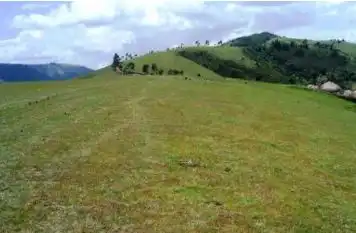
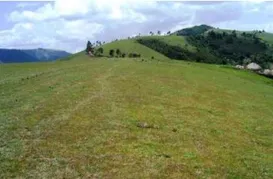
It is these types of vegetation that currently form the pastures of Bututsi and part of Mugamba and Kirimiro. These formations are mainly made up of Hyparrhenia, Eragrostis and Loudetia simplex. Over the centuries, following the occupation of this region, the forest was destroyed to establish crops, which would have led to a shrubby savannah for Hyparrhenia and Pteridium aquilinum. It is these types of vegetation that currently form the pastures of Bututsi and part of Mugamba and Kirimiro.
The post-cultural associations were subjected to intensive grazing, regular crops and fires until the vegetation was reduced to a savannah in Exotheca, and finally to the lawn in Hyparrhenia and Eragrostis or to the lawn in Loudetia simplex. In the Rusizi plain, overgrazed lawns are interspersed by groves in Cadaba and Commiphora.
Even very recently (around 1960 to be precise), these areas were still largely occupied by dense savannas with Hyparrhenia div. sp. and Themeda triandra, but currently this group, represented mainly by Hyparrhenia dissoluta, Hyparrhenia figariana, Hyperrhenia madaropoda, is in sharp decline.
In the suffrutescent stratum, Crotalaria aculeata, Cassia occidentalis, Cassia occidentalis, Cassia mimosoides, Melbania velutina, Sida cordifolia and some lianous phanerophytes such as Jasminum eminii, Cassia occidentalis, Cissus rotundifolia, etc. are frequently noted, extending from nearby xerophilic groves. In the herbaceous stratum, two grasses that are not very popular with livestock are widely distributed: Dactyloctenium aegyptium, and Urochloa panicoides. Brachiaria decumbens var.ruziziensis also abounds. The most trampled places are invaded by Cynodon nlemfuensis or by Chrysochloa hubbardiana.
In the Delta, an overgrazed lawn with Cynodon nlemfuensis about 30 m high described. Other species such as Asystasia gangetica, Sporobolus spicatus, Eriochloa meyeriana etc., emerge in the thick layer at Cynodon. Voluble herbaceous plants such as Ipomea cairica, Teramnus labialis, Cynanchum schistoglossum etc., enrich the vegetation, especially in areas that are sparsely grazed. Also, in this plain, the Bulbine abyssinica steppe forms a plant formation closely linked to solid solonetz. It is separated from the xerophilic groves in Cadaba and Commiphora by an intermediate group at Urginea altissima, which plays a pioneer role in the recolonization of these steppes by woody elements. The Bulbine abyssinica steppe is subject to intense overgrazing all year round, and its floristic composition has certainly varied in recent decades. As proof, we want only the fact that its dominant grass component some thirty years ago, Themeda triandra, has completely disappeared from the association.
In Bugesera, the Brachiaria eminii lawn forms a very poor plant cover that occupies very degraded environments with bare beaches covered with termite mounds.