Ecosystem
Ecosystem
Published on
2020 Apr 09Mountain rain forests
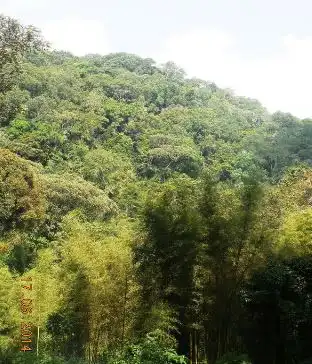
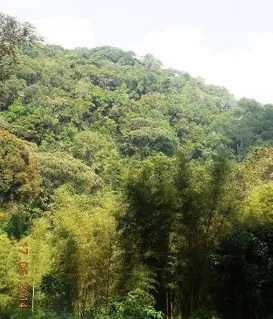
Mountain rainforests are plant formations that occupy the Congo Nile ridge, i.e. the highlands of western Burundi in the localities of Kibira, Mpotsa, Monge, Monge, Bururi and Vyanda. They are located at an altitude varying between 1,600 m and 2,600 m above sea level and are part of the Afro-montane region. The total area is around 50,000 ha. In this vegetation, three horizons can be distinguished:
- The lower horizon is between 1600 m and 1900 m above sea level. There are trees reaching about 25 m in height including Anthonotha pynaertii, Albizia gummifera, Parinari excelsa, Prunus africana, Syzygium guineense;
- The average horizon is between 1,900 and 2,250 m above sea level. Giant trees such as Entandrophragma excelsum, Prunus africana and Parinari excelsa subsp. holstii reaching 30, and sometimes 40 m in height;
- The upper horizon is between 2250 and 2450 m above sea level. A forest that is distinct from the two previous types develops there.
The crown generally stops at 15 m, with the exception of a few individuals of Podocarpus milanjianus reaching 20 m. The shrub layer is not very rich and often supports epiphytic plants such as mosses and lichens. Beyond 2500 m, plant formations of the Afro-subalpine type are encountered. These consist of sclerophyllous fruticeae where the Ericaceae family (Phillipia, Erica, Vaccinium and Agaurea) is the most represented.
Also, very extensive grass formations are observed on the summits and in very degraded areas (Exotheca abyssinica, Microchloa kunthii, Monocymbium ceresiiforme and Loudetia simplex). It should be noted that the Central African mountain bamboo grove in Arundinaria alpina occurs in Burundi from 1700 m to about 2300 m above sea level. It never forms very large mountains but on the contrary is here mixed with the mountain forest.