
Basic Page
Basic Page
Published on
2020 Apr 21Training workshop for Protected Area managers on the implementation of incentives
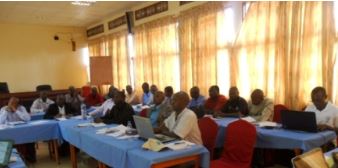
From 01 to 02 April 2015, in the premises of the Bethel Hotel in Gitega, a training workshop for protected area managers (PA) was held on the establishment of incentives. This workshop was organized as part of the project “Support to country action for the implementation of the work programme on Protected Areas” of the Convention on Biological Diversity POWPA/UNDP-GEF.
 |
The highlights of this workshop were as follows:
- Session to introduce the work of the workshop;
- Presentation sessions;
- Exchanges and discussions;
- Group work and feedback on the results of the work
| In his speech, one of the trainers said that it is high time for the mode of governance of PAs using the interventionist method to replace the method of co-management integrating the populations living near the PAs in their management. He also emphasized that this method of synergy in the management of PAs based on the principle that the conservation of PAs must go hand in hand with the development of the local human environment is to be preferred. | 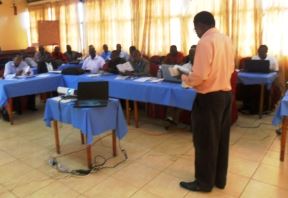 |
The presentation sessions were characterized by the following presentations:
- Governance methods in the management of Protected Areas in Burundi;
- Incentives for Protected Areas in Burundi;
- Establishment of incentives;
- Governance of Protected Areas in Burundi;
- Incentive provisions included in national laws;
- Example of an MOU between the Burundian Office for Environmental Protection (OPBE) and the Kirundo Support Committee.
The first series of presentations covered the different modes of PA governance in Burundi and the legal aspects of PA governance in Burundi.
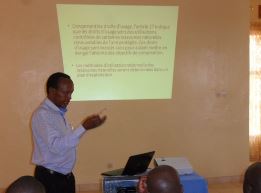 |
In the first presentation, the presenter emphasized that in order to successfully select appropriate measures to reverse or even stop degradation, identifying the immediate and root causes of threats to biological diversity and its components and their severity was a prerequisite. |
 |
After these presentations, a session of exchanges and discussions was observed. The discussions covered several points and conclusions were drawn. The question of what the population living near an AP is has taken a significant amount of time. After discussions, the participants concluded that the waterfront area of a park is an area that is located around this park and whose population has an influence on it. It varies according to the PA, the biological resources sought and the interventions that one wishes to carry out. For example, consider how far away is the last person who can enter a park for one reason or the other. | 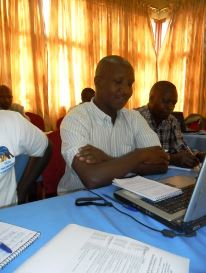 |
Several considerations must be taken into account in order to be able to determine and delimit the zone of influence or the riparian zone in the park. Finally, the riparian area is the area of cooperation inhabited by a population with whom park managers must cooperate for the protection of these parks. With regard to the establishment of incentives, it was emphasized that the project or microproject must be identified in consultation with the beneficiary population, otherwise the project cannot be successful. It is the beneficiaries who must propose the activities they consider relevant and this must not have perverse effects.
After this series of presentations, the work continued in groups and resulted in the following recommendations:
- Since the protection of the environment in general and biodiversity in particular is the role of everyone, the involvement of communities in actions to protect PAs was recommended;
- Recognizing that there are populations that are very strategic in the use of biological resources, the integration of the Batwa into PA protection structures is of paramount importance;
- Since soil degradation in households bordering PAs causes local populations to rely on PAs in search of land that is still fertile, it was emphasized that activities aimed at combating land degradation in general and around parks in particular would contribute significantly to the protection of these parks;
- In order to reduce the pressure of local populations on the parks, the policy of villagization with the permanent housing of domestic animals was recommended;
- In order to properly manage and protect the parks, it was recommended that the Ministry of Water, Environment, Land Use and Urban Development (MEEATU) set up the National Land Use Plan, which will allow the previous recommendation to be properly implemented, because it is this plan that will indicate the different areas of the country and what type of activity to do there;
- To make park protection actions more sustainable, socio-economic development projects that could improve the living conditions of populations were recommended;
- Noting that in most cases, funders go to the beneficiaries of budgetary support with well-developed projects without involving the target populations, which often causes failure in the execution of these projects, it was recommended to take into account the socio-economic needs of local populations. Here it is necessary to understand the development of projects in consultation with the target populations;
- As it was noted that there is often an overlap in the interventions of different donors in the preservation and protection of biodiversity, horizontal coordination in the activities of funders was recommended. It is first necessary to identify all the stakeholders in the conservation of biodiversity for concerted planning;
- Taking into account the fact that the promotion of tourism in PAs increases the number of customers in hotels and passageways nearby, awareness-raising among managers and owners of these houses was recommended so that they can contribute positively to the protection of these areas;
- Recognizing that funding for park protection activities often comes from donors and especially from foreign donors, which does not make it possible to achieve the objectives set in a satisfactory manner, it was recommended to help ensure that there is a certain degree of management autonomy in the parks in order to allow for self-financing;
- Since in most cases donors are not guided and oriented towards actions that are relevant to a particular park, it was recommended that management plans be put in place as a document that can guide funders and enable them to act effectively;
- In order to promote activities aimed at the self-financing of PAs, an eco-tourism center well equipped with financial and human resources was recommended to the OBPE.
The second day of the training was largely occupied with the analysis and improvement of the Memorandum of Understanding between the OPBE and the Kirundo Support Committee. Several amendments and improvements have been made to this memorandum. The main points dealt with during the meeting mainly concerned the commitments of the contracting parties and the methods of monitoring and evaluation.