
Basic Page
Basic Page
Published on
2020 Apr 27Mini-consultation workshop for the development of the National Strategy and Action Plan on APA
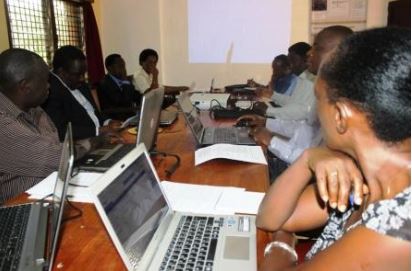
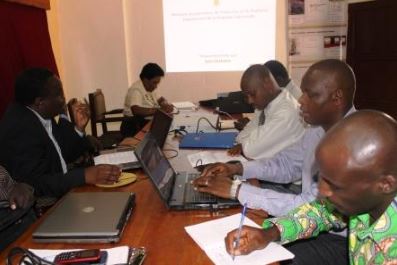
At the liaison office of the Burundian Office for Environmental Protection, a mini-consultation workshop was held for the development of the National Strategy and Action Plan on Access and Sharing of Benefits arising from the use of genetic resources on Wednesday, June 15, 2016. It was organized as part of the project “Ratification and implementation of the Nagoya Protocol on access to genetic resources and the fair and equitable sharing of benefits arising from their use in member countries of the Central African Forests Commission (COMIFAC)” under the funding of UNEP.
|
The activities started with a welcome word from the APA Focal Point. He then noted the activities that have been carried out in the implementation of the Nagoya Protocol ratified by Burundi. This includes the validation of two documents on the analysis of the political, legal and institutional framework on ABS in Burundi and the state of play of APA in Burundi. Finally, he said that this mini-workshop is part of the process of operationalizing Burundi's act of commitment and that the elements developed in these various themes will be used to enhance the development of the National Strategy and Action Plan on APA.
| After his words of welcome and orientation of the activities, the consultants then began a presentation session. The first presentation was made by Dr. BANGIRINAMA Fréderic, the botanist, teacher/researcher at the Ecole Normale Supérieure. His presentation focused on the procedures and main steps required for bioprospecting on biological resources and what tools and capacities are needed. | 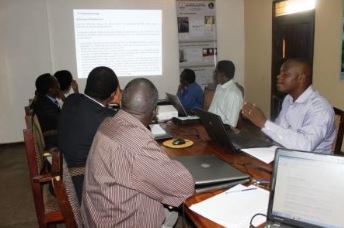 |
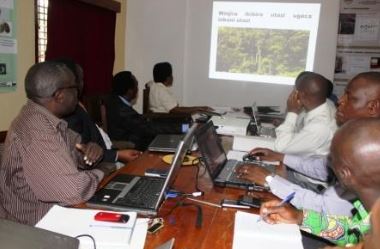
During this presentation, he said that biological resources can be economically profitable by going through the stages of biosprospecting, namely:
- Search for medicinal plants through a survey of surrounding populations and sampling oriented to privileged environments rich in these coveted biological species;
- Determine the socio-economic uses of each biological resource in order to realize its value;
- Identify exploitable species in forest, aquatic and agrosystems ecosystems;
- Determine the stocks or quotas of exploitable species and their degree of exploitation;
- Temporal structure for evaluating the regeneration of exploitable species.
 |
This was followed by a presentation by Professor NIYONZIMA Deo-Douglas, a chemist from the University of Burundi, on the procedures and main steps necessary to isolate a healing molecule until patenting or its protection by intellectual property; what are the collaborative frameworks necessary for the case of Burundi and what are the necessary tools and capacities needed. The presenter then showed the steps to follow to isolate a molecule that begins with the survey among Traditional Practitioners. |
Information relating to the plant family, scientific and vernacular name, parts used, method of preparation and associated plants are put into a table. This step is followed by phytochemical screening, which consists in detecting the active ingredients contained in the plant. The results are presented in the form of a table. The isolation and identification of a given active ingredient are then initiated. He went on to talk about the collaborative frameworks needed in this area. To obtain the molecule, collaboration will take place with Tradipracticers/Associations, University of Burundi and other research institutions, Botanists, Chemists, Microbiologists, doctors, friendly universities (better equipped). As for obtaining patents, it is important to collaborate with the World Intellectual Property Organization (WIPO), experts in the field and Burundian executives to prepare the product for presentation.
| After this presentation, Mr. Ignace MBONINYIBUKA, Industrial pharmacist, gave his presentation on the possibilities of valorizing medicinal genetic resources in Burundi, how to strengthen collaboration with other national researchers and possibilities of cooperation with abroad in research. He talked about modern methods of plant biotechnology, traditional plant cultivation: consistent vegetative propagation of genotypes and culture in bioreactors: tissues, cells, organs from this plant. | 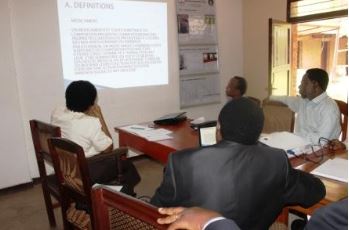 |
solid
 |
Another theme on how to protect genetic resources and associated traditional knowledge under the national law on industrial property, the constraints of its implementation in relation to the Nagoya Protocol and the solutions to be considered was developed by Mr. Seth GASHAKA, an executive of the Ministry of Commerce and Industry. During his presentation, he talked about intellectual property rights, intellectual property in the international, regional and national context. |
In Burundi, he said, the law of August 20, 1964, which was amended by decree law on July 1, 1968, stipulated that only patents, trademarks and industrial designs were protected. The new law of 28/07/2009 introduced new features in terms of the extent of the scope of protection. Utility models, electronic layout designs, handicrafts, traditional knowledge and biological resources are new fields even at the international level. This new law, which advocates the protection of biological resources and traditional knowledge, will facilitate the implementation of the Nagoya Protocol, he said.
| This series of presentations was closed by the presentation of Mr. Anicet BIGIRIMANA, advisor to the Ministry of Public Health and the Fight against AIDS in charge of traditional medicine, on how to protect genetic resources and associated traditional knowledge according to the national law on traditional medicine, the constraints of its implementation in relation to the Nagoya protocol on access and sharing: Overview of associations and propose how to strengthen their functioning. | 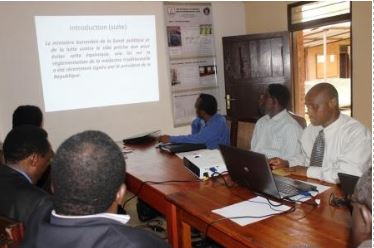 |
In Burundi, he pointed out, there are seven associations of Traditional Practitioners approved by the Ministry of the Interior and Patriotic Training. Approved associations may request collaboration with the Ministry of Public Health and the Fight against AIDS. These associations are supervised, they benefit from capacity building and benefit from training. As for the relationship between the regulation of traditional medicine and the Nagoya Protocol, he said that some aspects of the Nagoya Protocol were implicitly and coincidentally partially taken into account by the Traditional Medicine Development Strategy and by the Decree on the Regulation of Traditional Medicine and the Art of Traditional Medicine and the Art of Traditional Medicine in November 2014.
This mini-workshop was closed by the APA Focal Point, who thanked the consultants for the commendable work they had just done, the results of which will be used in the development of the National Strategy and Action Plan on APA.