Document
Document
File Name
Cad- polit-strat-refor-pech-aquac-afrique.pdfFile Type
PDF DocumentFile Size
5.15 MBCreated Date
2020 May 13Updated Date
2020 May 13Published on
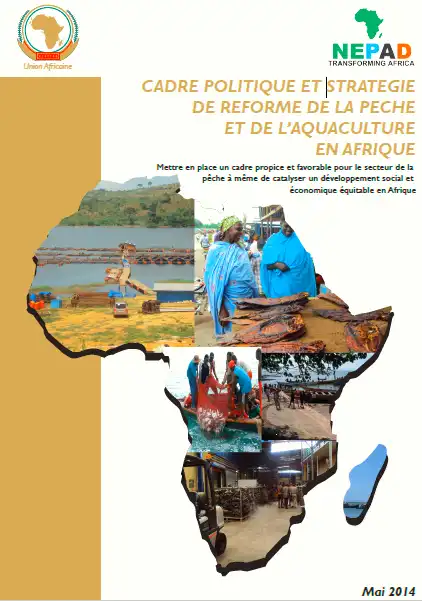
2014 May 01Policy framework and strategy for fisheries and aquaculture reform in Africa
Africa is blessed with a diversity of fishery resources that offer immense potential and significant opportunities to contribute significantly to Africa's socio-economic growth and to the improvement of the livelihoods of its citizens. For this reason, the Detailed Programme for Agricultural Development in Africa (CAADP) has been adjusted to include the accompanying document on fisheries. In 2005, in Abuja, Nigeria, during the “Fish for All” Summit organized by AU/NEPAD, African heads of State and Government adopted the New Partnership for Africa's Development (NEPAD) Action Plan for the Development of African Fisheries and Aquaculture. Prior to the Abuja Summit, and at their Sirte Summit in February 2004, the Heads of State and Government adopted the Sirte Declaration, which mandated the AU Commission to promote the development of fishery resources, to improve facilities to promote post-harvest management, including the management of fisheries in exclusive economic zones, and regional cooperation in fisheries management.
In addition, during the Abuja Summit on Food Security held in December 2006, heads of State and Government committed themselves to protecting fish as one of the strategic commodities and affirmed their commitment to achieving self-sufficiency in fish by 2015. The important milestone in the development of African fisheries was marked in September 2010 by the holding of the first Conference of African Ministers in charge of Fisheries and Aquaculture (CMAPA) in Banjul in the Gambia. The CMAPA was subsequently approved by the 18th Session of the AU Assembly of Heads of State in 2011, as the political body responsible for fisheries and aquaculture, within the Conference of African Ministers of Agriculture (CMAA).
The benefits and opportunities arising from fishery resources can be actualized to achieve the CAADP goal of contributing 6% of fishery resources to agricultural growth on the continent, improve food and nutrition security and livelihoods, and create wealth. Some of these opportunities are based on the following considerations:
• opportunities for increased fish trade and investment in the sector through improved standards, regional cooperation and market studies;
• capacity building, for example to increase the contribution of small-scale fishing to the rural economy in terms of employment, household food security and employment for poor rural populations;
• empowering stakeholders, including marginalized groups such as women and youth, for effective participation in fisheries management processes.