
Basic Page
Basic Page
Published on
2020 Mar 17Awareness-raising session for students on the biodiversity of the Rusizi National Park and the arboretum as well as the ecosystem services derived from this biodiversity
On 6 March 2020, an awareness-raising session for students was held in the Delta sector of Rusizi National Park on the biodiversity of the Rusizi National Park and the Bujumbura Arboretum as well as the ecosystem services derived from this biodiversity. This was organized as part of a research program, information exchange, awareness-raising and biodiversity conservation.
Were present:
The Director General of the Burundian Office for Environmental Protection (OBPE), the Head of the Rusizi National Park, Administrator of the Bujumbura Arboretum, the OBPE managers, the PNRI guides, the PNRI guides, the agents of the Bujumbura arboretum, the Director, teachers and students of the Lycée Communal de Kinyinya.
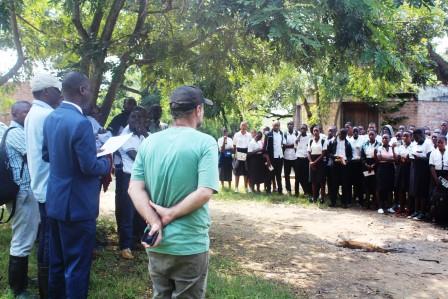
|
| Overview of awareness session participants |
Welcome word of welcome
|
The welcome message was delivered by the current PNRI Manager. He welcomed the participants. By the way, he pointed out that PNri is rich in biodiversity. It contains a diversity of both fauna and flora that the participants were going to have the opportunity to contemplate. He closed this welcome by passing the floor to the CEO of OBPE to say the opening remarks of this activity. |
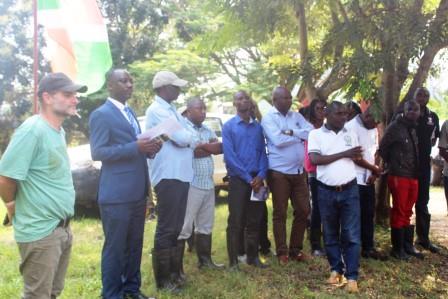 |
| Welcome word by the PNRI manager |
Opening remarks
The opening remarks of the session were delivered by the Director General of the Burundian Office for Environmental Protection. He started this word by thanking the various participants in this session who responded to this invitation.
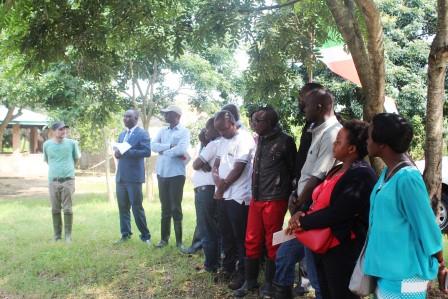 |
He said that this activity was part of raising awareness among populations living near protected areas about the importance of their biodiversity and the ecosystem services that flow from it. She explained that Burundi's biodiversity was once rich in both fauna and flora. Unfortunately, this biodiversity is currently under threat as a result of human actions. |
| Opening remarks from the CEO of OBPE |
He added that as a result of rapid demographics, various elements of biodiversity have already disappeared (e.g. lion, elephant) and the various ecosystems that make up the habitats of species are in perpetual deterioration. He landed by encouraging the various target groups to safeguard and sustainably manage the remaining biodiversity in Burundi. To achieve this, all target groups must have knowledge about this biodiversity and be aware of its importance. Finally, he pointed out that it was with this in mind that this session was organized for young people, the managers of tomorrow, to call on them to get involved in the preservation of this biodiversity and in raising the awareness of their loved ones.
| After the opening remarks, the program of activities was presented by the organizers on behalf of OBPE and PROCOBU. The organizers reported that it had been organized to explore firstly the biodiversity of the Rusizi National Park and secondly the Bujumbura Arboretum. And this was organized in order to contemplate the different biodiversity of the two protected environments. | 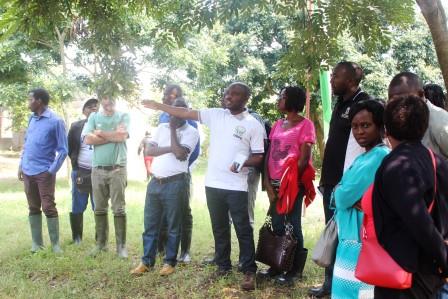 |
| Presentation of the session program by one of the organizers |
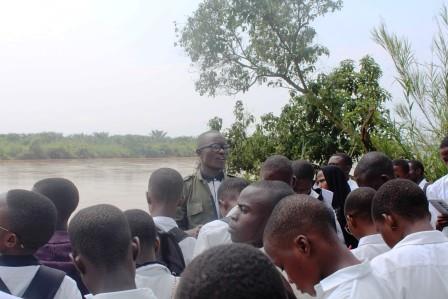
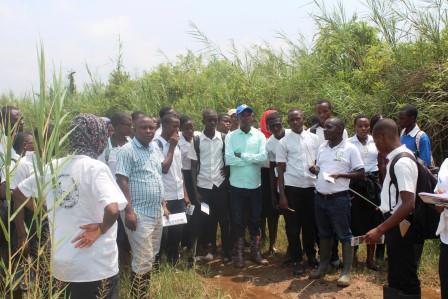
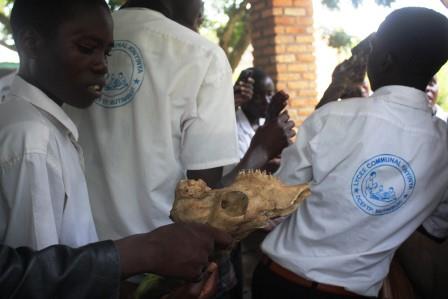
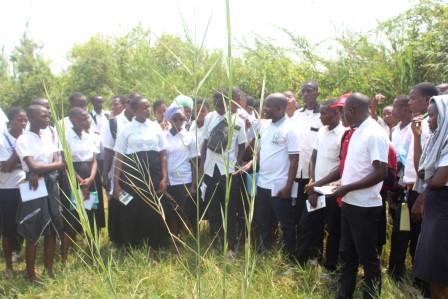
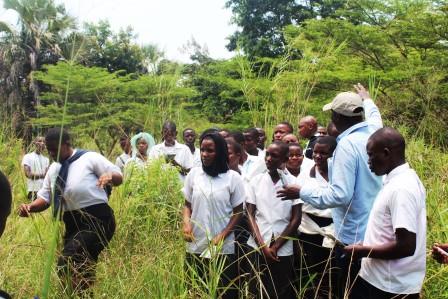
Subsequently, a guided tour began in the Rusizi National Park precisely at the level of its Delta sector. The 200 students who were present were divided into groups and each group was guided by OBPE agents who controlled the biodiversity of this park. Thus, during this visit, different habitats were explored as well as their biodiversity. Thus Acacia polyacantha savannas and temporarily flooded grasslands were visited. Different dominant species have been shown and species are either edible or used in traditional medicine or for other purposes. Each time, the guides should explain and answer the various questions of the participants.
 |
 |
 |
 |
Presentation of the biodiversity elements of the Rusizi National Park
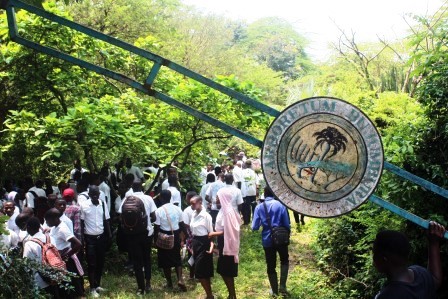
After the visit to the Rusizi National Park, the exploration of the Bujumbura arboretum followed.
|
| Guided visit to the Bujumbura Arboretum |
During the guided tour, the administrator emphasized that this arboretum is made up of a mosaic of habitats. Indeed, there are habitats with more or less closed tree cover and more or less open habitats.
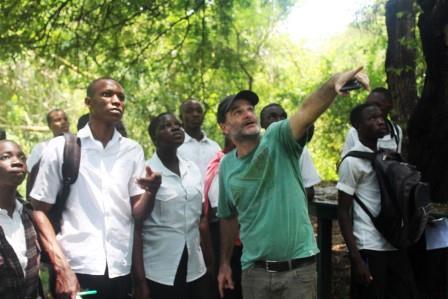 |
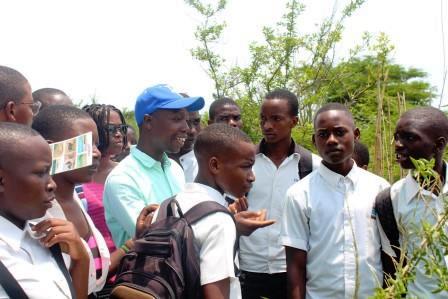
Different native species have been observed in the different habitats at different stages of growth ranging from small seedlings to trees of up to more than 10 m in height. Some of these species include Acacia sieberana, Acacia albida, Acacia albida, Erythrina abyssinica, Albizia coriaria, Hyphaene petersiana, Ficus capensis, Ficus capensis, Ficus ovata,... |
| Presentation of the biodiversity elements of the Bujumbura Arboretum |
 |
 |
 |
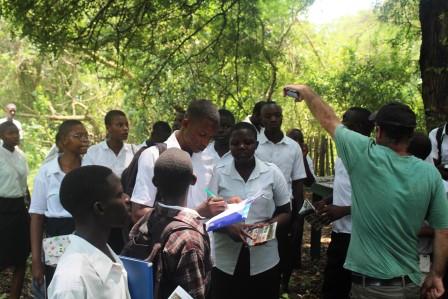 |
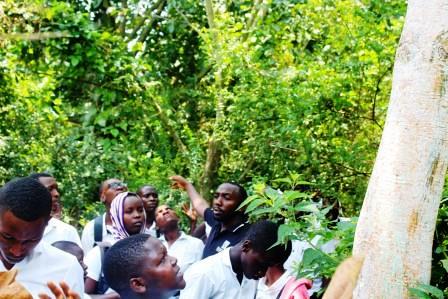
Guided tour in the Bujumbura arboretum
After the visit to the arboretum, various speeches followed, in particular those of the Head of the Rusizi National Park, the Administrator of the arboretum and finally that of the closing speech of the Representative of the DG of the OBPE.
|
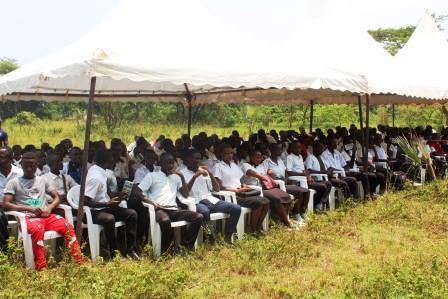
| Overview of students after the guided tour at the Bujumbura Arboretum |
After the guided tour, the manager of the Rusizi National Park took the floor by thanking the students of the Kinyinya Communal High School for the interest shown in improving their knowledge of the biodiversity of this park.
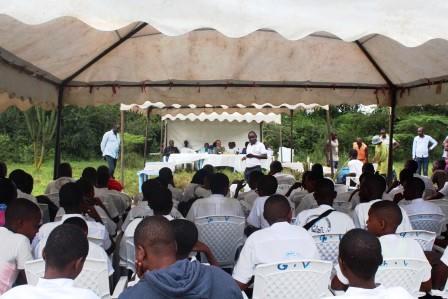 |
He then took the opportunity to give a brief presentation of this park and its biodiversity. He noted that this protected area has two sectors, including the Delta sector, dominated by Acacia polyacantha savannas, and the Palmeraie sector, dominated by Hyphaene petersiana groves. Within this park, there are islands sheltering water birds, which are often migratory. In addition to hippopotamuses, the latter are tourist attractions in the area. |
| Speech by the PNRI manager |
Finally, he took the opportunity to thank the initiators of this project, which contributes to the awareness of the various target groups, including youth, in order to be involved in the preservation and sustainable management of the biodiversity of this park.
Afterwards, the arboretum administrator also thanked the participants for the interest shown during the visit to the arboretum.
| According to the administrator of this arboretum, it was created in 2002 in order to preserve indigenous species that have been exterminated as a result of anthropogenic actions either in protected areas or in other natural ecosystems in Burundi. This arboretum is a gene bank for endangered species in the various regions of Burundi. | 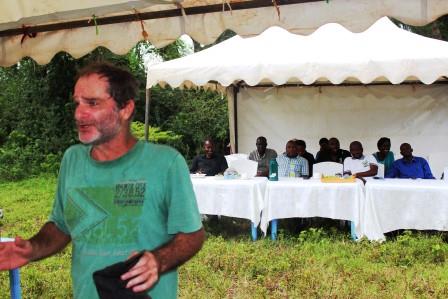 |
| Speech by the administrator of the Bujumbura Arboretum |
In addition, he explained that it is in forests that most of the indigenous species are found and that different countries are mobilizing for their preservation. According to him, these species contribute at various levels and in several areas, particularly in the regulation of global warming, in the foodforest and in research in general. He recalled that the time planned for this activity did not allow the entire environment to be visited, but he confirmed that such actions will be multiplied in order to make Burundi's biodiversity better known.
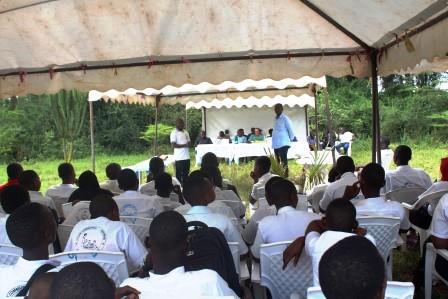 |
Before closing the activity, the organizer on behalf of OBPE explained to the students what is expected from biodiversity as well as the ecosystem goods and services that result from it. According to him, biodiversity is defined under its three levels, in particular ecosystem biodiversity, specific biodiversity or species biodiversity and finally genetic biodiversity. |
| Closing remarks by the organizer on behalf of OBPE and representative of the CEO of OBPE |
He then explained what ecosystem services are and gave examples of them. Among these examples, he talked about the role of pollinating insects in plant reproduction.
Finally, the Representative of the CEO of OBPE closed the session by also thanking the various participants for showing interest in improving their knowledge of biodiversity in Burundi. He also said that such initiatives will be multiplied so that all the population in general and young people in particular are aware of the importance of the biodiversity of protected areas in Burundi so that they are involved in its sustainable management.