
Basic Page
Basic Page
Published on
2020 Jan 16Contribution to the study of vegetation dynamics in Rusizi National Park
The present research was carried out in the Rusizi National Park. It is located in the lower plain of Rusizi, the most western part of Burundi. It is located exactly north of Lake Tanganyika in the Imbo natural region and has an area of 10673 ha. The ambition is to provide, at the end of the work, a reference tool for monitoring the evolution of the vegetation in this Park, which can be gradual or regressive.
NSENGIMANA Egide
Under the supervision of:
- Mr. Benoît NZIGIDAHERA, Biodiversity Research Manager at the National Institute for Environment and Nature Conservation (INECN)
- Prof. Bernadette HABONIMANA, Professor at the University of Burundi, Faculty of Agronomy and Bio-Engineering (FABI), Department of Environmental Management and Ecology.
 |
First, it was a question of making a journey over an area sufficiently representative of the area under study to observe the distribution and repetition of certain species. The transects were then drawn so as to cross the study areas. The sites surveyed were chosen according to the physiognomy marked by different stages of evolution of plant formation. | 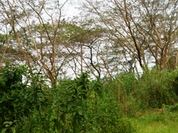 |
The vegetation survey, a basic tool in the study of vegetation dynamics, was each time carried out in each chosen site. It was necessary to make a list of all the plant species present with for each of them the concept of “Abundance-Dominance” as well as phytogeographical and ecological indications. Anthropogenic actions have also been identified. To be able to take accurate surveys, tiles measuring 1 m x 1 m were formed within each delimited permanent plot. The vegetation was surveyed layer by layer from top to bottom.
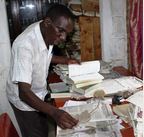
The sample collection phase was followed by the taxonomic determination of the specimens. The herbarium of the National Institute for Environment and Nature Conservation (INECN) and that of the University of Burundi were consulted for comparison. Quite a few species have been identified and are preserved at the INECN herbarium.