
Basic Page
Basic Page
Published on
2020 Jan 14Ecological and economic study of some non-wood forest products from ecosystems in Burundi: Case of wild Dioscorea ssp.
1. Ethnobotanical study of wild Discorea subsp. in Ruvubu National Park
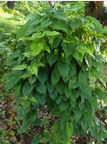 |
This research is being carried out in Ruvubu National Park and in surrounding households. The present research is motivated by several reasons, including the fact that edible wild yams are a very energetic food but which the population is not interested in. Also, researchers are not very involved in the research of wild plants, including wild edible yams. Yam is a monocot with edible tubers belonging to the Dioscoreaceae family. | 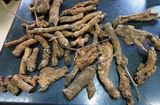 |
They are climbing plants with loose leaves with twining stems that gladly wrap around the stakes. They are perennial by the root system, but can be grown annually.
This study:
- Aims to improve knowledge about wild edible yams;
- Will contribute to the fight against the uncontrolled exploitation of natural biological resources and the protection of the environment;
- Also aims at the cultivation of forest species as one of the alternatives to protect natural biological resources;
- It also aims to improve knowledge on the uses of wild edible yams.
2. Ethnobotanical study of Aframomum Angustifolium in Ruvubu National Park
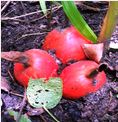 |
The present research was conducted in the Ruvubu National Park, in the Left Bank II sector. The park includes shrubby savannas and forest galleries and it is these that are the majority home to Aframomum angustifolium. The choice of the study area was motivated by the presence and abundance of Aframomum angustifolium. The research was carried out in order to improve knowledge on the use, treatments, valorization and domestication of these forest plants. | 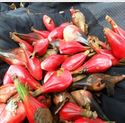 |
Data collection was carried out using the qualitative and quantitative method to increase the reliability of the results. By sampling, several sites depending on the presence and the homogeneity or heterogeneity of the sites were explored. On each site, surfaces that varied according to the occupancy by Aframomum angustifolium were studied. On each delimited surface, the number of feet on it was counted. Research on Aframomum angustifolium in situ has been done over several periods. So far, almost all of the data needed for the study has already been collected and is being processed. The results of the study will be published very soon.
This research was carried out by MVABUHA David under the supervision of:
Mr NZIGIDAHERA Benoît and Professor HABONIMANA Bernadette.