Basic Page
Basic Page
Published on
2019 Dec 27Improvement of the fertility of agro-ecosystems of the Mubaragaza hill in Mutumba commune
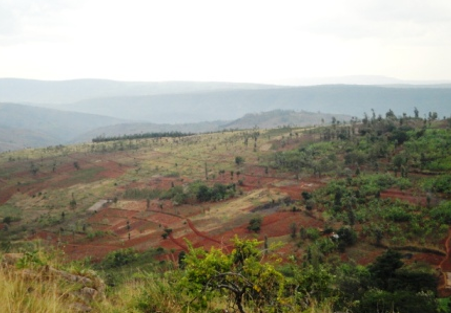
Since the 1993 crisis, agricultural production has fallen on Mubaragaza Hill as a result of unfavorable climatic hazards (drought, hail,...), soil degradation following severe erosion, seed degeneration, seed degeneration, lack of agricultural fertilizers and lack of phytosanitary products.
The need for inputs remains increasing, especially as soils are becoming poorer from day to day as a result of erosion and galloping population pressure. The agricultural land on Mubaragaza Hill is not protected from erosion by contour lines and soil-fixing grasses. Despite the repopulation of livestock by United Nations organizations, manure remains insufficient for the fertilization of agricultural land. Livestock is given to households that have enough fodder, so the neediest households do not benefit from this donation.
Moreover, the composting technique is only adopted by a few operators. The poverty of the population does not allow soil to be amended with organic fertilizers. This agricultural overexploitation leads to progressive soil degradation.
Given that more than 90% of the population of Mubaragaza Hill lives from agriculture, the low agricultural production on this hill has harmful consequences on all sectors of the life of this population.
Landlord
|
|
Methodist Relief and Development Fund |

Achievements
The project contributes to the reduction of soil degradation in Mubaragaza Hill in order to increase agricultural production.
The interventions carried out in this project are consistent with:
1. Techniques for the protection and maintenance of soil fertility
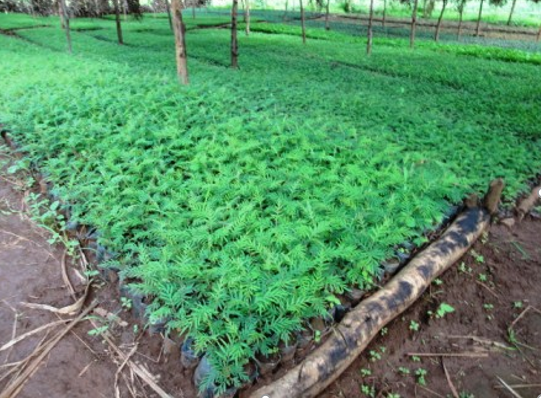
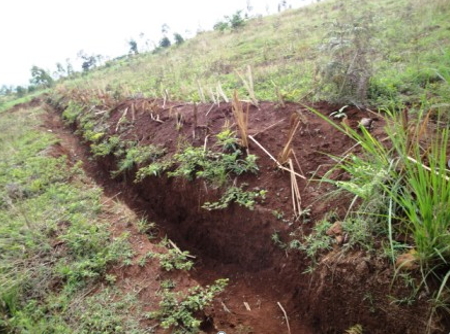
Level curves have been dug in Mubagaraza. Nursery production and planting of 172800 plants in the agricultural environment bordering the Ruvubu National Park. The plants produced were composed of Maesopsis eminii, Malkhamia lutea, Grevillea robusta, Callistris sp. and Eucalyptus sp.
 |
 |
|