
Basic Page
Basic Page
Published on
2021 Apr 09Mini consultation workshop on indicators of conflicts between hippopotamuses in the Rusizi NP and local communities living in the area
On 29 March 2021, a mini-consultation workshop was held on the indicators of conflicts between hippopotamuses in the Rusizi NP and local communities living in the vicinity. This workshop took place at the Rusizi National Park Office and is part of the activities of the study on “Indicators of conflicts between buffaloes in Ruvubu National Park and hippopotamuses in Rusizi National Park and local communities living in Rusizi National Park”. The study is part of a Measurement, Reporting and Verification (MRV) approach that is important for setting up basic indicators for monitoring biodiversity. The activities carried out were jointly identified by the Burundian Office for Environmental Protection (OBPE) and the University of Burundi (UB) and financed by the Royal Institute of Natural Sciences of Belgium (IRSNB) through its CeBIOS Program.
Were present:
Managers of the Rusizi National Park, representatives of local communities including hill administrators at the base, farmers/herders, representatives of local associations including those of fishermen and women (see the list in annex).
Welcome word
At the start of the mini-workshop, the Park Manager thanked the participants for responding to the invitation. He told them that it is an honor for the park that such a consultation activity on conflicts between animals (hippopotamuses in the Rusizi NP) and local communities living in the area is organized and could directly constitute a subject of debate today between the people concerned. He called on participants to closely follow the presenter's intervention on the results collected during the surveys and inventories in which most of them had participated.
The designers of the project supported the intervention of the Head of the Park and indicated that it is a purely technical meeting where people are called upon to return the data that they themselves had contributed to their collection by gladly agreeing to answer the survey questionnaires. “You are now called for a consultation on this data where you have a great responsibility to agree that the rapporteurs on this data were faithful and if not, this meeting is an opportunity to correct errors and/or fill in the gaps. At the end of the exploitation of this data, the document that will be produced will be important to inform decision makers to make consistent decisions for the management of the park and for your well-being,” they said.
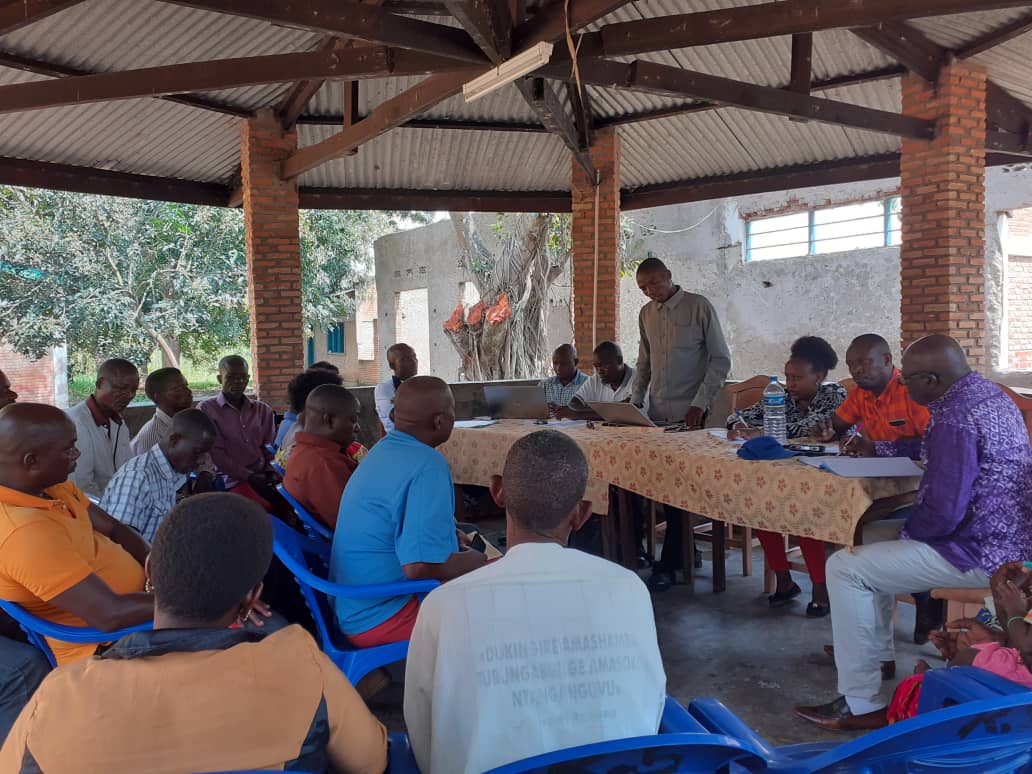 |
| Exposed by the Student |
The study area and the sites visited, of the persons concerned, their knowledge and perception of the Park, what is the law relating to the protection of the site, the constraints they have to cohabit with the park, the activities of the park where they are involved, reason for dissatisfaction, the reasons for dissatisfaction, the animals that are the basis for poor cohabitation, the extent of destroyed cultures, their attitudes to the damage recorded, the sanctions imposed on them, their proposal for better governance of the site, etc. The student carrying out the study has then proceed with the presentation of its investigation results. He reviewed the organization of the questionnaire, which includes the following points:
At the end of his presentation, it was time for discussions where the participants spoke and thanked the initiative for the work in progress and the organization of the mini workshop. Comments and additions have been incorporated directly.
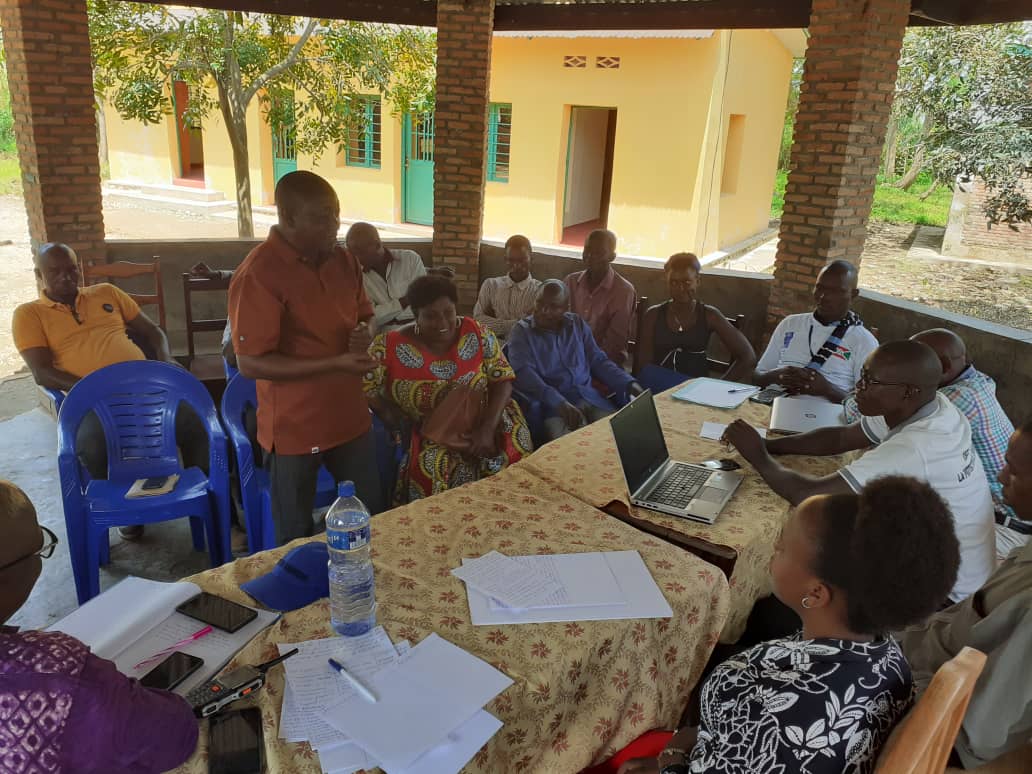 |
They recognized the content of the summary of the compendium of the data collected during the surveys carried out. They noted that they look forward to a popularization of the final document that will be produced.