
Basic Page
Basic Page
Published on
2020 Apr 28Report of the validation workshop of the guide to raise awareness among decision-makers at the highest level on issues of biodiversity integration and of the draft ordinance establishing the Technical Committee on Biodiversity
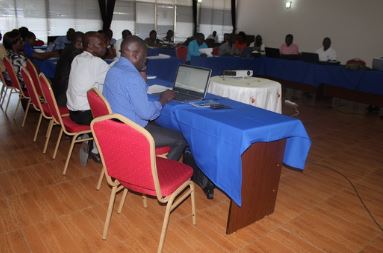
On February 16, 2018, within the premises of the Restaurant la Détente, a workshop was held to validate the guide to raise awareness among decision-makers at the highest level on issues of integration of biodiversity and the draft ordinance establishing the Technical Committee on Biodiversity. The activities of this workshop began with an introduction by the moderator, Mr. Gérard Nduwayezu, during which the participants were informed about the planned activities as well as the changes in the programme that they had had available for some time. He then invited the Director General of the Burundian Office for Environmental Protection (OBPE) to deliver a solemn opening speech for the activities of this workshop.
|
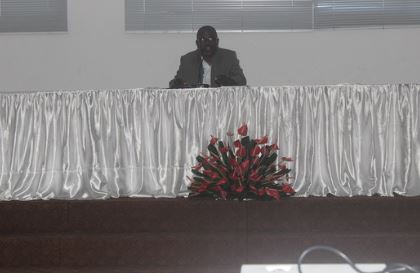 |
Taking the floor, the Director General of the OBPE, Honorable Dr. Samuel Ndayiragije, said that we are celebrating 25 years of the Convention on Biological Diversity (CBD) but that everywhere in the world the conservation of biological diversity remains a merciless fight, with Burundi not being spared. He then said that this workshop is part of the project “Integrating biodiversity into national and sectoral development policies in Burundi” financed by the Secretariat of the Convention on Biological Diversity. |
The overall objective of this project, he added, is “the integration of biological diversity into national, sectoral and local strategies, plans and programmes for development and the fight against poverty.
Continuing his remarks, he said that the new National Strategy and Action Plan on Biodiversity 2013-2020 (SNPAB) underlines that the old national strategy of 2000 was not implemented due to the lack of sectoral integration of biodiversity issues.
This same policy document identifies three main root causes at the origin of the degradation of biodiversity, which are the lack of a framework for collaboration and coordination between the various actors, the poor understanding of decision-makers on biodiversity issues and a lack of perceptible commitment by decision-makers.
Thus, he added that to overcome the lack of framework, collaboration and coordination with the various actors, it proved to be the creation of an interministerial platform whose regulatory text was developed and validated. But the latter cannot function without there being a Technical Committee on Biodiversity as an executive body, he said.
In the same speech, the Director General of OBPE, said that concerning the low level of clarification of biodiversity issues and the commitment of decision-makers, a guide to raising the awareness of decision-makers at the highest level on biodiversity integration issues and a draft ordinance establishing the Technical Committee on Biodiversity, and a draft ordinance establishing the Technical Committee on Biodiversity, are all important tools to meet the respective challenges of raising the commitment and further enlightening of decision-makers on issues of biodiversity and the recognition and functioning of Technical Committee on Biodiversity (CTB). He ended his remarks by first thanking the CBD Secretariat for its financial support in developing awareness-raising tools, then thanking the participants for attending despite their multiple concerns and promised them that their contributions would be taken into account.
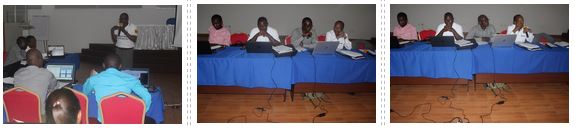
| The first presentation was given by the Jurist Nindorera Damien from OBPE and focused on the guide for raising awareness among decision-makers at the highest level on biodiversity integration issues. Taking the floor, he first presented the outline of his presentation, which focused on six main points. Next, the presenter started by defining the concept of biodiversity mainstreaming, which is the act of ensuring that biological diversity and the services it provides are appropriately and appropriately considered in policies and practices that have an impact on them. | 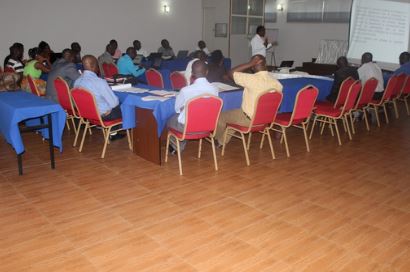 |
He took this opportunity to point out that integration issues date back a long time, more precisely to 1992 with the adoption of the Convention on Biological Diversity. Thus, he cited the key articles of the CBD that talk about integration issues and also said that Burundi is a party to this convention.
Continuing his presentation, he spoke about the role of biodiversity and ecosystem services, which are among others the supply service, the support service, the regulatory service and the cultural and aesthetic service. Thus, the production of electricity by REGIDESO, the production of rice by SRDI and the high production of tea by the OTB are part of one of the ecosystem services of Kibira, he said. Despite this undeniable importance, biodiversity is threatened by deforestation, pollution and the proliferation of invasive or degrading species. During the same presentation, the presenter spoke about the root causes of biodiversity degradation, which are the lack of a framework for collaboration and coordination between different actors, decision-makers who are not informed on biodiversity issues, and the commitment of decision-makers that is not very noticeable.
Although threatened by human actions, the lawyer Damien Nindorera has shown that biodiversity is essential for sustainable development. Indeed, the 2030 Agenda for Sustainable Development, agreed by the 193 Member States of the United Nations, defines an ambitious framework of universal and indivisible goals and targets to address a number of global societal challenges. These Sustainable Development Goals (SDGs) and the Strategic Plan of the Convention on Biological Diversity are interdependent and mutually reinforcing; therefore, the implementation of one contributes to the achievement of the other. For example, objective 2 of the SDGs relating to the elimination of hunger, ensure food security, improve nutrition and promote sustainable agriculture in all its forms and everywhere in the world, biodiversity contributes to its achievement in a significant way.
Before concluding his presentation, he mentioned that the integration of biodiversity can only succeed by creating effective institutional, legislative and regulatory frameworks adapted to national needs and situations. He ended his presentation by saying that the consideration by decision-makers of the content of this document will make it possible to meet the challenges of the national biodiversity strategy.
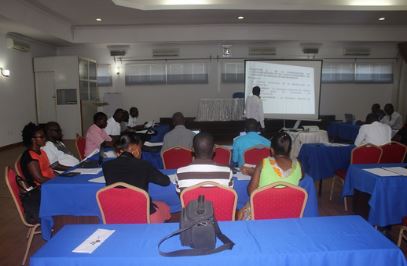 |
The second presentation was given by Legal Officer Damien Nindorera from OBPE and focused on the draft ordinance establishing the technical committee on biodiversity. He began his presentation by saying that this project consists of three chapters, the first of which defines the Technical Committee on Biodiversity (CTB), which is an executive body of the interministerial platform to consolidate the coordination of actions to integrate biodiversity issues into sectoral policies. |
The main missions of the CTB are:
- encourage the integration of biodiversity into national policies, programmes, strategies and action plans in various sectors;
- monitor and evaluate biodiversity integration activities; produce periodic reports;
- collaborate with other existing committees in the environmental sector;
- report to the Interdepartmental Platform for Decision-Making;
- prepare periodic meetings of the Interministerial Platform.
He continued his presentation by talking about Chapter II on the composition, organization and functioning of the Biodiversity Technical Committee. The CTB, he said, is composed of a president, a vice-president, members and a secretariat responsible for:
- organize the work and meetings of the Biodiversity Technical Committee;
- prepare and make available working documents;
- ensure the implementation of the decisions of the Technical Committee on Biodiversity;
- write annual reports for the Biodiversity Technical Committee;
- monitor, on a daily basis, the implementation of the missions of the Technical Committee on Biodiversity.
He finished his presentation on the various and final provisions, placing particular emphasis on article 9, which states that the services provided by the Biodiversity Technical Committee are not paid.
After these two presentations, there was a session of questions, comments and suggestions from participants on the two documents that were the subject of the workshop.

|
The presenters assisted by the Director General of OBPE in turn gave clarifications on the various concerns of the participants.
|
After clarifications from the presenters, the activities of this workshop continued in the groups. The first group was responsible for analysing the guide to raising awareness among decision-makers at the highest level on issues of biodiversity mainstreaming and the second group was responsible for analysing the draft ordinance establishing the technical committee on biodiversity.
The group work session was followed by a presentation of the results by a representative of each group.
The workshop ended with the validation of the document including the corrections and recommendations of the participants.
During this workshop, the following recommendations were made:
- Given the importance of biodiversity for human beings, it was recommended to prepare all documents related to biodiversity in Kirundi to facilitate understanding by local communities;
- It was recommended to summarize the guide for raising awareness among decision-makers at the highest level on biodiversity integration issues;
- Since the Director of Forests provides the secretariat of the Technical Committee on Biodiversity, it was recommended that he be included in the members of the said committee;
- Considering that this committee is purely technical, it was recommended to include biodiversity specialists among the members of the committee;
- It was also recommended to add a member from higher education;
- Given the role of decision makers in the protection of biodiversity, it was recommended that the guides be designed as a wake-up call.