
Basic Page
Basic Page
Published on
2020 Jan 14Study of the influence of the sequential development of the ecological environment on pollinating wild bees in Burundi
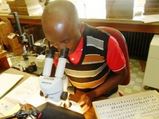 |
All pollinating plant/bee interactions have a mutual benefit that generally contributes to the maintenance of an important ecological balance and a strong fauna and flora biodiversity. However, bees are experiencing significant threats related to habitat loss due mainly to the use of land for agricultural purposes and urbanization. In Burundi, the reduction of natural forest ecosystems has been made in favor of immense agroecosystems and urbanized environments. |
One might ask whether this reduction has no harmful effects on pollinating wild bees. The present work contributes to showing the impacts of ecological disturbances on the diversity of pollinating wild bees in Burundi.
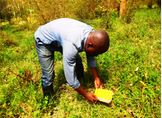 |
Data collection was done using the entomological net and passive traps with yellow-colored cups for seven months. Data analysis and interpretation were done using calculations of total and species richness, relative abundance (A.R), the Margalef diversity index (R Mg), and the Sørensen similarity index (1948). | 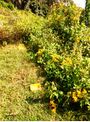 |
The results of this study led to the conclusion that by saving the Protected Areas of Burundi, we keep the refuge environment for pollinating wild bees intact. Agroforestry would also contribute to the preservation of these bees. Finally, it is necessary to maintain and strengthen the flowering and heterogeneity of habitats during sustainable urban planning by introducing into public gardens or wild urban gardens with species of plants or trees offering a possibility of visit and nesting for pollinating wild bees.
The present research was carried out by Mr. NAYIKEZA Longin as part of the thesis work at the end of his university studies in order to obtain the Complementary Master's degree in Environmental Sciences. The supervision of the work was carried out by:
- Prof. Jan Bogaert, University of Liège/ Gembloux Agro-Bio Tech, Biodiversity and Landscape Unit;
- Prof. Habonimana Bernadette, University of Burundi, Faculty of Agronomy and Bio-Engineering and
- Dr. Alain Pauly from the Royal Institute of Natural Sciences of Belgium.
The result of this research is the result of the combined efforts of several research institutions and personalities such as the University of Burundi, the Royal Institute of Natural Sciences of Belgium (IRSCnb) which, as part of the CHM in partnership with Burundi, supported our field activities and granted internship grants on bee taxonomy, Mr. Han de Koeijer and Dr. Marie-Lucie Susini, Dr. François HABIYAREMYE MUHASHI Y from the same institution that devotes its heart and soul to monitoring the dynamics of habitats in protected areas of Burundi, Mr. Nzigidahera Benoît, Head of the Biodiversity Research Department at the Burundian Office for Environmental Protection.