Ecosystem
Ecosystem
Published on
2020 Apr 02Lake Tanganyika
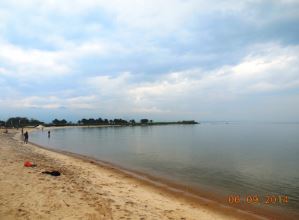
Lake Tanganyika lies at the bottom of the western branch of East Africa's rift valleys at an altitude of about 775 m. Its total area is of the order of 33,000 km2, 7% of which is in Burundi.
 |
This lake is characterized by an alternation of sandy, rocky and mixed substrates, as well as a particularly high depth (max. 1470 m), but the part inhabited by aquatic fauna is only of the order of 100 to 200 m deep. Lake Tanganyika, with more than 2,000 species of plants and animals, is among the richest freshwater ecosystems in the world. |  |
More than 600 of these species are endemic to the Lake Tanganyika basin. The lake is a source of clean water, fish, transportation, and other economic purposes for an estimated population of 10 million people living in the lake basin. Annual fish production generally ranges from 165,000 to 200,000 tons, which translates into annual gains in the order of tens of millions of US dollars.
Vegetation is essentially composed of floating macrophytes and phytoplankton made up of species belonging to the groups of diatoms, Chlorophytes, Cyanophytes, Dinophytes, Cryptophytes, Cryptophytes, Cryptophytes, Xanthophytes and Prymnesiophytes. Phytoplankton in Lake Tanganyika has been sufficiently studied. In the pelagic collections, there were recorded: 474 infragenic taxa of diatoms, 224 taxa of Chlorophytes, 224 taxa of Chlorophytes, 111 taxa of Cyanophytes, 59 taxa of Dinophytes, 14 taxa of Cryptophytes, 14 taxa of Cryptophytes, 4 taxa of Xanthophytes, 4 taxa of Xanthophytes and one taxon of Prymnesiophytes.
Macrophytic vegetation consists of species belonging to the genera Ceratophyllum, Nymphaea, Nymphaea, Utricularia, Najas, Potamogeton, Chara, Cladophora, Pistia, Cladophora, Pistia, Pistia, Azolla, Nymphaea, Nymphaea, Utricularia, Utricularia, Najas, Potamogeton, Chara, Chara, Cladophora, Pistia, Pistia, Azolla, Nymphaea, Vallisneria, This lake also has swimming macrophytes and border macrophytes. The latter, unfortunately disappearing, often form a narrow column on the periphery, maintained by the lake's water waves. The characteristic species often encountered are Pennisetum purpureum, Pennisetum trachyphyllum, Vossia cuspidata, Phragmites mauritianus. The macrophytes that swim in Lake Tanganyika have been little studied. More than 500 ha of Pistiastratiotes and Azolla pinnata were formed in the pelagic environment of Lake Tanganyika. Their proliferation on the lake would be linked to the phenomenon of eutrophication.