Protected Area
Protected Area
Published on
2020 Apr 01Kibira National Park (PNK)
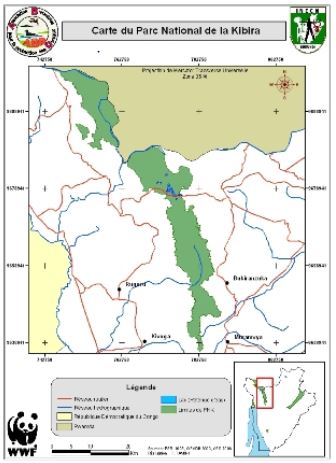 |
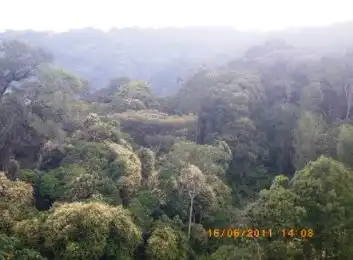
This park, 80 km long and about 8 km wide, covers 40,000 ha. This rugged environment is mainly dominated by mountain rain forest, spread between 1,600 m and nearly 2,700 m. Kibira National Park, which extends between 1,600 and approximately 2,800 m, consists of three large mountain forest complexes, still partially primary and covering the northern part of the Congo Nile ridge in Burundi. It extends from Burundi to the Nyungwe forest in Rwanda. | 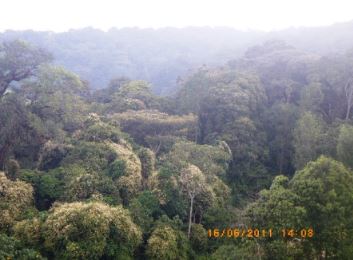 |
The forest itself extends on average up to 2,500 m above sea level; beyond this altitudinal limit, it is extended by sclerophyllous fruit-bearing vegetation. Receiving an average annual rainfall of the order of 1,700 to 2,000 mm, the park plays a key ecological role for all the surrounding regions, in particular for the Imbo plain and the plateaus located below, for which this protected environment serves as a water regulator.
The avifauna is very diverse with about 200 species, the most remarkable of which are the Crested Eagle (Lophaethus occipitalis), the giant turaco (Corythaecola cristata), the grey-cheeked Hornbill (Bycanistes sbcylindricus) and 14 species of nectarines.
The main plant formations encountered in this park are:
- Plant formation in Entandrophragma excelsum and Parinari excelsa var. holstii; - Plant formation in Parinari excelsa var. holstii and Polyscias fulva;
- Plant formation in Polyscias fulva and Macaranga neomildbreadiana and in Syzygium parvifolium ; - Forest
secondary to Hagenia abyssinica corresponding to a less advanced phase of recolonization of the environment and to Faurea saligna corresponding to a Crete effect; - Altitude formation to Philippia benguellensis and Protea madiensis;
- Formations to Arundinaria alpina with two facies: a pure bamboo grove and a mixed bamboo grove;
- Thalweg background formation corresponding to high-altitude marshes.
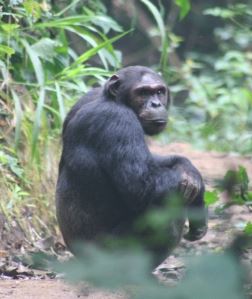
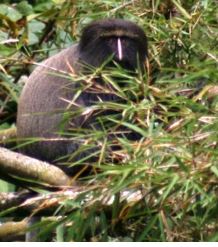
Overall, over 644 plant species are known. From the point of view of fauna, the park has about 98 species of mammals. Insectivores with 20 species include endemic elements such as Myosorex blarina, Crocidura lasona, Crocidura niobe, etc. Eight species of Chiroptera have been identified. Ten species of Primates, the most frequently encountered of which is Cercopithecus mitis dogetti. Pan troglodytes can also be found there. The avifauna is very diverse with about 200 species, the most remarkable of which are Lophaethus occipitalis, Corythaecola cristata and Bycanistes sbcylindricus.
The reptiles of the park are poorly known but the ophidians most often observed are in particular Atheris nitchei and Bitis gabonica.
For the other groups (Amphibians and fish) studies remain to be done.