
Basic Page
Basic Page
Published on
2020 Mar 20Awareness-raising workshop for research, academic and implementation institutions on the OBPE scientific bulletin
On February 19, 2020, an awareness session was held in the premises of the Hotel Best Outlook Hotel, for research, academic and implementation institutions on the OBPE scientific bulletin, as part of the program of research, information exchange, information exchange, awareness-raising and conservation of biodiversity in Burundi.
Were present:
The Permanent Secretary, Representative of the Minister of the Environment, Agriculture and Livestock, the Representative of the Director General of the Burundian Office for Environmental Protection (OBPE), the professors of university institutions, the directors of research institutions, the various managers of the OBPE and other institutions and independent researchers in the field of biodiversity. A total of 39 participants responded to the invitation from academic institutions including the University of Burundi, the University of Burundi, the Lumière University and the Ecole Normale Supérieure, the officials of the Ministry of the Environment, Agriculture and Livestock as well as those of the OBPE, the representatives of state institutions including the Burundian Geographic Institute (IGEBU), the Burundi Geographic Institute (IGEBU), the Burundian Office of Mines, the Burundi Tea Office (OTB) and the representatives of the School Radio Nderagakura (List of presences in the appendix).
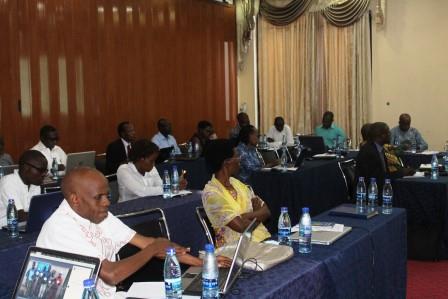
|
| Overview of session participants |
Welcome word
The workshop started with a welcome speech by the Representative of the Director General of the Burundian Office for Environmental Protection. Thus, the Representative of the CEO of OBPE welcomed the participants warmly and thanked them for having responded to the invitation to take part in this workshop. He added that their presence, despite their busy schedules, was eloquent proof of their interest in the OBPE scientific bulletin. Introductively, he emphasized that the publisher of this bulletin is the Center for Exchange of Information on Biological Diversity (CHM-Burundi) .and that the overall objective of its creation is to set up an information system to disseminate scientific knowledge on biodiversity at the national, continental and even global levels.
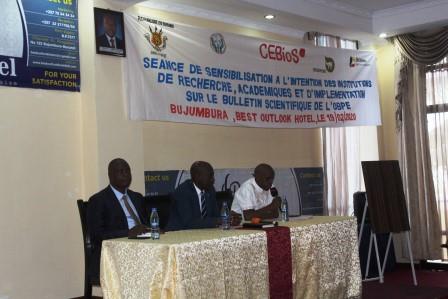 |
Finally, he pointed out that their discussions, their fruitful exchanges and their recommendations that will be formulated during this session, will allow the continuity of the exchange of information on biodiversity through the publication of many scientific articles to facilitate the monitoring of the implementation of the Convention on Biological Diversity in Burundi as well as the orientation of decision-makers in making decisions for the conservation and sustainable management of biodiversity. |
| Welcome message from the representative of the CEO of OBPE |
Workshop opening speech
The opening speech of the workshop was delivered by the Permanent Secretary, Representative of the Minister of Environment, Agriculture and Livestock. The latter began by showing that it was an honor and a real pleasure to proceed with the solemn opening of this workshop. He also took the opportunity to thank the participants again for having temporarily interrupted their daily activities to respond to the invitation to participate in this workshop.
He explained that in Burundi, the implementation of the Convention on Biological Diversity is monitored through the Biodiversity Information Exchange Center (CHM-Burundi) to guide the making of adequate decisions for the conservation and sustainable use of Burundi's biodiversity.
He added that the CHM-Burundi center, created in 2002, disseminates information online through the website and non-web media including this scientific bulletin. He pointed out that the various themes that are the subject of the various publications in the OBPE newsletter are of great importance for conservators and managers of the environment in general and of biodiversity in particular but also for academic, research and implementation institutions. Thus, he added that the workshop concerning the newsletter and the research on biodiversity therefore seeks to consolidate the exchange of biodiversity information to guide the making of adequate decisions for the conservation and sustainable use of biodiversity in Burundi.
|
He therefore invited the participants to follow with interest the various presentations that would follow, in particular on the progress of the implementation of the Convention on Biological Diversity in Burundi, the assessment of publications in the newsletter since its creation, the state of play and trends of biodiversity in Burundi, the status and trends of biodiversity in Burundi, and ecosystem services in Burundi's Protected Areas. |
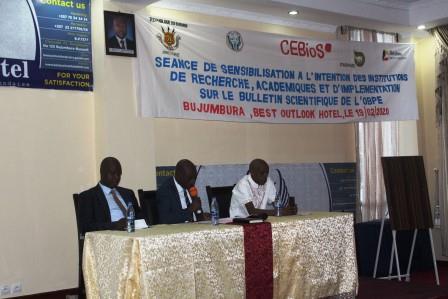 |
| Opening remarks of the workshop by the Permanent Secretary, Representative of the Minister of Environment, Agriculture and Livestock |
Finally, he also took the opportunity to thank the Royal Institute of Natural Sciences of Belgium (IRSNB) and other stakeholders for the continued support shown to support Burundi in activities for the protection and sustainable management of biodiversity.
After the opening remarks of the Permanent Secretary, various presentations on the various themes followed.
The first presentation focused on the following theme “Evaluation of the achievements of the 2019 OBPE scientific bulletin”. This presentation was made by Prof BANGIRINAMA Frédéric, editor-in-chief of the OBPE scientific bulletin. The presenter started by recalling the objective of creating the OBPE scientific bulletin, which therefore remains that of setting up an information system to disseminate scientific knowledge on biodiversity across the continent.
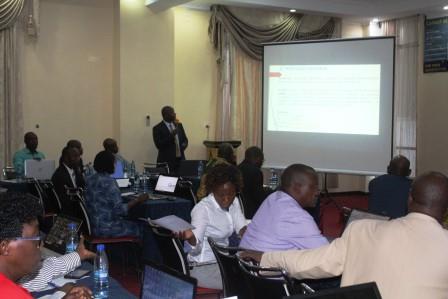 |
He then added that this scientific bulletin is annual and that its publisher is the Clearing House Mechanism (CHM) created in 2002 under the Belgian Partnership under the Convention on Biological Diversity. He noted that the newsletter is available online at http://bi.chm-cbd.net and in print © CHM-Burundais. |
The presenter explained that there is an editorial board responsible for analyzing submitted manuscripts before they are approved for publication or not. This committee is made up of:
- Editor-in-Chief;
- Deputy Editor-in-Chief;
- Associate editors;
- Scientific committee.
Indeed, the decision to accept or reject a manuscript based on readers' opinions is the responsibility of the Editor-in-Chief, the Deputy Editor-in-Chief and the Associate Editors. And before the publication of the newsletter, it is submitted to the entire Scientific Committee to elicit comments on the content and format.
The presenter also reported on the newsletters that have already been published since the creation of this newsletter. These include: 12 regular INECN scientific newsletters, 1 special INECN scientific bulletin on a symposium organized by the UB, 3 scientific newsletters on the environment and biodiversity.
A total of 85 articles have been published since 2006 and the themes addressed include conservation (22), ecology (20), systematics (15), valorization (14), pollution (4) and renewable energies (1).
In order to revitalize this bulletin, according to the presenter, certain actions have been carried out, in particular: the revision of the Editorial Text and instructions to the authors, the updating of the Scientific Committee and the updating of the themes and the establishment of the managers by theme.
In conclusion, it was noted that this newsletter would allow the development of Burundian researchers, particularly master's and doctoral students, and that there is little influx of manuscripts, problems in finding reviewers of manuscripts, and the slowness in evaluation and revision.
The second presentation focused on the Convention on Biological Diversity. This presentation was made by Hon Dr NDAYIRAGIJE Samuel. The latter began by defining what biodiversity is, which in article 2 of the Convention on Biological Diversity is defined as the “Variability of living organisms of any origin including, among others, terrestrial, marine and other aquatic ecosystems and the ecological complexes of which they are a part; this includes diversity within and between species as well as that of ecosystems”.
|
After this definition, the presenter reviewed the history of the Convention on Biological Diversity, stressing that it was signed at the Rio Summit on 5 June 1992 and its entry into force on 3 December 1993. He recalled that Burundi ratified this Convention on 14 July 1997. |
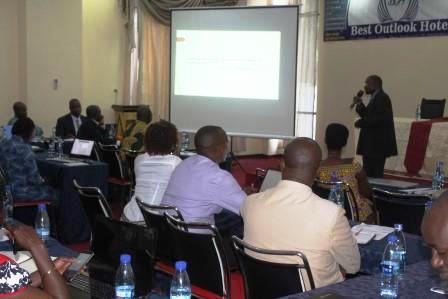 |
| Presentation by Hon Dr NDAYIRAGIJE Samuel |
He then presented the objectives of the CBD, which include:
- The conservation of biological diversity;
- The sustainable use of its components;
- Fair and equitable sharing of the benefits arising from the exploitation of genetic resources, including through adequate access to genetic resources and appropriate transfer of relevant technology, taking into account all rights to such resources and techniques, and through adequate funding.
Next, the presenter emphasized that the CBD is based on the various bodies and protocols. These bodies include the Conference of the Parties (COP), the Secretariat and Subsidiary Bodies, and the Intergovernmental Platform on Biodiversity and Ecosystem Services (IPBES). While the CBD protocols are:
- Cartagena Protocol on Biosafety of the Convention on Biological Diversity
Burundi has been a Party to the Cartagena Protocol since 31 December 2008.
- The Nagoya-Kuala Lumpur Additional Protocol on Liability and Redress to the Cartagena Protocol on Biosafety
Burundi is not a Party to this Protocol
- The Nagoya Protocol on Access to Genetic Resources and the Fair and Equitable Sharing of Benefits Arising from Their Use, relating to the Convention on Biological Diversity
Burundi has been a Party to the Nagoya Protocol since October 12, 2014.
In the area of information exchange, the presenter emphasized that Contracting Parties facilitate the exchange of information, from all publicly available sources, relevant to the conservation and sustainable use of biological diversity, taking into account the special needs of developing countries. And so Burundi appointed the National Focal Point of the CHM in 1998 that. And that in 2002, the CHM was created under the Belgian Partnership and housed at the National Institute for Environment and Nature Conservation (INECN), currently converted into the Burundian Office for Environmental Protection (OBPE). In 2003, a Committee of 10 Interministerial Focal Points (PFIs) for the CHM was formed.
Also, each State Party is required periodically to draft a National Biodiversity Report. In addition, Burundi transmitted the Sixth Biodiversity Report in December 2018 to the Secretariat.
The presenter also noted that there is a National Biodiversity Strategy and Action Plan 2013-2020 and the Aichi Targets. For example, 20 ambitious but realistic goals were adopted under the Strategic Plan: the Aichi Biodiversity Targets.
In Burundi, the 2013-2020 National Biodiversity Strategy and Action Plan has the vision: “By 2020, information is provided to all actors on scientific and traditional knowledge, tools, methods, innovations, technologies and best practices for the revision and implementation of the National Strategy and Action Plan on Biological Diversity”.
And to operationalize this national vision, the CHM has set itself four strategic axes, namely:
- Dissemination of information, knowledge, data, data, tools, technologies and practices in an effective and efficient manner and awareness-raising for the implementation of the CBD;
- Strengthening the capacities of the CHM in the field of Biodiversity;
- Facilitating and strengthening scientific and technical cooperation;
- Establishment of a financial mechanism for the CHM-Burundians.
The presenter said that thanks to the work carried out by the CHM, Burundi won the Silver Medal Prize at COP13 held in Cancun, Mexico in December 2016 and the Gold Medal Award at COP14 held in Sharm El Sheikh in Egypt in November 2018.
Afterwards, the presenter reported on biodiversity in the world. He presented the various results of studies establishing the state of biodiversity at the global level. Among these studies, the most recent and most comprehensive is that of the Intergovernmental Platform on Biodiversity and Ecosystem Services (IPBES), which updated this state of affairs. According to IPBES, there are 8 million animal and plant species on Earth (including 5.5 million insect species). And that 1 million are threatened with extinction and that among the estimated 5.9 million terrestrial species, more than 500,000 no longer benefit from the natural habitat necessary for their long-term survival.
Afterwards, the presenter reported that during the CO14 held in Sharm El Sheikh in Egypt that a working group was set up to prepare for the Post-2020 period. The report of this Working Group will provide guidance on the Post-2020 Global Biodiversity Framework, which will succeed the Aichi Biodiversity Targets, which should have been achieved before 2020 but which will remain largely unachieved by then. He added that the post-2020 global biodiversity framework should be adopted at COP15 at the Convention on Biological Diversity, which will take place 15 to 28 October 2020 in Kunming, China.
In view of all of the above, it was concluded that our planet is on the brink of collapse, that our house is burning, that everyone sees it, and that very few people are taking action. The presenter said that we have yet entered the era of the sixth extinction and that man is in danger of disappearing with it, like dinosaurs. Therefore, it is imperative that we act quickly before it is too late.
The third presentation was made by Prof HABONIMANA Bernadette and focused on the theme: “Study of trends in biodiversity, species and ecosystems providing ecosystem services: Formulation of indicators to measure, monitor and report the trend of biodiversity in Burundi”.
The presenter started the presentation by noting that this study was carried out in order to implement the National Biodiversity Strategy and Action Plan (SNPAB).
The overall objective of this study was to set up indicators to measure, monitor and report on the state of biodiversity in Burundi.
 |
Specifically, the aim was to identify data and information available from all possible sources relating to the national goals implementing Aichi Targets 5 and 14 in relation to the questions formulated, to formulate and widely disseminate the indicators based on the reliable data and information collected and to set up a functional mechanism to measure, monitor and report on the status of biodiversity based on the indicators. |
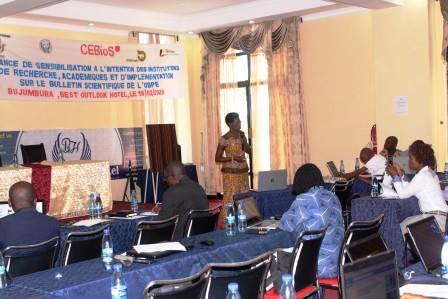
| Presentation by Professor HABONIMANA Bernadette |
Then, she pointed out that three indicators have been formulated to be followed up during this study. And each indicator had a corresponding methodology. These indicators were formulated as follows:
Indicator I: Analysis of trends in the extent of natural ecosystems (mountain forests, miombo woodlands, xerophilic groves, Hyphaene petersiana forest and marshes).
The corresponding methodology was:
- to collect and digitize all existing maps (old and current) on these ecosystems: vegetation maps of Burundi, maps of protected areas in Burundi containing the ecosystems above.
- Collect numerical data on the areas (ancient and current) of ecosystem areas through scientific studies, management plans, decrees delimiting protected areas and other reliable documents available;
- Exploit existing satellite data on the vegetation situation in Burundi;
Indicator II: Analysis of trends in species characteristic of natural ecosystems and natural habitats in relation to industrial plantations (sugar cane, oil palm and rice cultivation)
The corresponding methodology was:
- Collect and digitize all existing maps (old and current) on the areas occupied by crops;
- Analyze the species characteristic of ecosystems or natural habitats that have been or are in the process of being supplanted by these cultures;
Indicator III: Analysis of trends in populations and the risks of extinction of species that provide ecosystem services
The corresponding methodology was:
- On the basis of existing studies (current and old) and especially those initiated on ecosystem services, identify species of capital importance in the provision of ecosystem services;
- Final dissertations on these species by students of the Faculty of Agronomy and Bioengineering. Ex. Eremospatha, Cyperus latifolius;
- Analyze the distribution of these species and deduce an ancient and current distribution (use of satellite maps in case of dominant species in homogeneous habitats such as marshes and palm groves);
- Draw up maps on the distributions of these cash;
- Based on the data obtained above, analysis of the degree of threat of these species, by setting simplified and referred criteria for the classification of endangered species, but without being identical, to those of the IUCN for endangered species.
When it comes to the extent of natural ecosystems, the results differ from ecosystem to ecosystem. In the Rusizi National Park, for the period from 1981 to 2015, it turned out that some of its plant formations are experiencing a regression in terms of extent and others have disappeared completely. For example, for the period of 1981 and 2015, the forest in Hyphaene petersiana lost nearly 1400 Ha, the groves in Cadaba are tending to disappear since only 155 Ha remain in 2015 while they had 1267 Ha in 1981. As for the Steppes in Bulbine abyssinica, they have completely disappeared. However, in Kibira National Park, during the same period, the results showed that the rainforest increased in terms of area at the expense of cultivated areas. In 2009, when the Malagarazi RN was created, it had an area of 9112.32 ha, including 8074.39 ha for swamps and 1037.93 ha for open forests. In 2015, this reserve had only 293.19 ha, including 195.26 ha of marshes and 1037.93 ha for open forests, following the extension of SOSUMO. Other ecosystems in Burundi that have also experienced a decrease in their area include the open forests of RN de la Malagarazi, the xerophilic groves of the Murehe Integral Reserve and the marshes.
In terms of population trends and the risk of extinction of species providing ecosystem services, the study showed that the populations of Eremospatha, used in handicrafts and provides valuable goods, are tending to disappear given nationally its remaining area is only 1.04 Ha. Also, the results showed an alarming situation for the populations of Cyperus latifolius, used in the manufacture of mats. For the 5 provinces identified, only 7.19 ha of area remain.
In terms of trends in species related to ecosystems and habitats, the results of this study reported 9 endangered species (Balanites aegyptiaca, Cyperus latifolius, Eremospatha sp.,...), 11 vulnerable species (Hyphaene petertiana, Acacia polyacantha,...) and 11 rare species (Prunus africana, Brachystegia longifolia,...), 11 vulnerable species (Hyphaene petertiana, Acacia polyacantha,...) and 11 rare species (Prunus africana, Brachystegia longifolia,...), 11 vulnerable species (Hyphaene petertiana, Acacia polyacantha,...) and 11 rare species (Prunus africana, Brachystegia longifolia,...), 11 vulnerable species (Hyphaene petertiana, Acacia polyglobiflora,...). Taking into account endangered species that are priority for conservation, the results found 7 species of first priority, 12 of medium priority, and 12 of low priority.
The presenter concluded by stressing the need for urgent action to save Burundi's biodiversity. He noted that a policy brief summarizing the results of this study was produced so that decision-makers can understand the state of biodiversity in Burundi and contribute to its sustainable management.
The fourth presentation focused on the theme: “Urban growth and the disappearance of biodiversity: the case of the city of Ngozi”. This presentation was made by SIMBABAJE Apollinaire.
|
The presenter started by explaining that urbanization is increasing in Burundi and that the urban population is neglecting or ignoring the protection of the environment at the expense of the flora and fauna that are victims. However, he deplored the fact that urban impact studies on biodiversity are rare in Burundi. As a result, urban growth generates ecological imbalances. Hence the strong need to conduct studies leading to sustainable solutions.
|
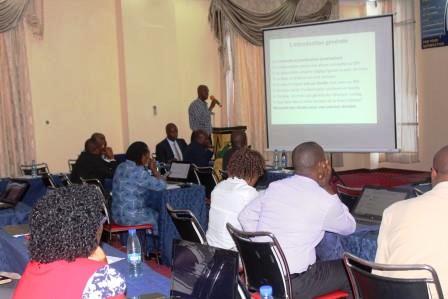 |
| Presentation of SIMBABAJE Apollinaire |
The overall objective of this study was to contribute to the assessment of the threat to biodiversity in the city of Ngozi caused by urban growth in order to prevent the resulting environmental risks.
He then presented the methodology used to carry out the study. This methodology was divided into three stages, including the collection of quantitative information through a survey questionnaire, the stratification of the study area and finally the collection of qualitative data.
The results of this study, according to the presenter, showed that urbanization as a factor in the disappearance of biodiversity is a reality in the city of Ngozi. Indeed, the rate of disappearance of trees found in this city is 80% while the recovery rate is 25%. He regretted that these rates reflect the trend of desertification in the city of Ngozi. He explained that this situation would be linked to the fact that the owners of the plots prefer to value all the space economically at the expense of biodiversity. Other reasons, according to him, that would explain this would be that the unbuilt spaces in the city's plots are occupied by food or vegetable crops and not by trees. In addition, most of the population is unaware of construction standards due to the lack of awareness and adequate governance in this sector justified by the lack of monitoring and control of compliance with standards.
However, the results of this study showed that the population of the city of Ngozi remains in favor of planting trees, reconstituting green spaces and its biodiversity. The owners of the plots prefer fruit species, which would be an important asset for the restoration of biodiversity.
According to the presenter, there are assets to consider in the strategy for restoring biodiversity in the city of Ngozi. These advantages include:
- Presence of non-built spaces in built plots
- Awareness of the presence of flora and fauna in the plots
- Awareness about the preservation of green spaces in cities
- Monitoring information on biodiversity with the media
- Some owners of the plots themselves manage to restore some of the biodiversity that has disappeared.
But also, the following challenges should be taken into account:
- Uncontrolled acquisition of land to be built
- Absence of prior development to build
- Uncontrolled exploitation of the non-built surface in the plots;
- Absence of promoters of biodiversity actions among land purchasers and in urbanization services
- Absence of follow-up visits to enforce the standards and provisions of the building permit for those who have them.
- Permission to build without provisions specific to the promotion of biodiversity
Finally, the presenter made some suggestions from this study:
- Establishment of a special binding law that protects the biological diversity of expanding urban areas;
- Initiate awareness-raising campaigns on the protection of biodiversity throughout the country
- Integrate binding environmental biodiversity provisions and standards into the documents issued to city residents to build;
- Conduct follow-up visits to the residents' plots to enforce the plans presented at the time of obtaining the building permit
- Provide plots for the creation of green spaces in the establishment of urbanization plans
- Organize information meetings for city residents on the importance of protecting biodiversity;
- Support and encourage all initiatives aimed at restoring and protecting urban biodiversity;
- Conduct research aimed at collecting as much data as possible on the degradation of urban biodiversity in order to make it a bank that will facilitate the various stakeholders to carry out actions for the restoration of suitable urban biodiversity, etc.
The fifth presentation was given by Dr. Patrice BIGUMANDONDERA and focused on the following theme: “State of pollution in the city of Bujumbura”.
He started his presentation by defining what pollution is. The latter has been defined as the degradation of the environment by the introduction into the air, water or soil of materials that are not naturally present in the environment.
 |
He added that this pollution, often anthropogenic, causes a disturbance in the ecosystem whose consequences can go as far as the migration or extinction of certain species unable to adapt to change. Then, he addressed the context of the city of Bujumbura by pointing out that with approximately 14,500 hectares, this city has, according to the latest estimates, a resident population of one million inhabitants. |
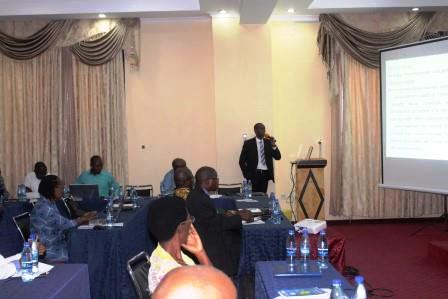
| Presentation by Dr Patrice BIGUMANDONDERA |
He added that this city is crossed by 3 main rivers: Ntahangwa, Muha and Kanyosha. On the environmental level, waste management component, two sanitation systems exist, in particular collective sanitation where 5 areas (Ngagara, Buyenzi, Bwiza, Nyakabiga and Rohero) are partially connected to the lagoon-type treatment plant (Buterere wastewater treatment plant) and non-collective sanitation (ANC) where 9 zones use it as structures with septic tanks and latrines in all its forms but mainly traditional latrines. As for solid waste, it is collected and sent to a wild dump in Mubone located more or less 2 km from the western periphery of Kinama commune. The daily production of an inhabitant of the city of Bujumbura is estimated at 0.6 kg of waste per day.
The presenter then reported on the state of pollution in the city of Bujumbura. According to him, three levels of pollution in this city should be considered, in particular pollution by household and industrial wastewater, pollution by solid waste and pollution by greenhouse gases.
From the point of view of pollution by wastewater, he explained in a household in the city of Bujumbura, there are mainly 4 categories of wastewater: toilet water, shower water, kitchen water and laundry water. For areas not connected to the treatment plant, some use the septic tank on a large scale (Kinindo and Musaga), while for others the traditional latrine dominates (Cibitoke and Kinama). Also, it has been found that kitchen and shower wastewater is for the most part discharged into the gutters.
The presenter explained that in addition to the problems related to wastewater, there were other problems that should not be overlooked, mainly the nature of the soil in the city of Bujumbura. On clay soil, in the case of non-collective sanitation (ANC), the clogging of the losing well is often observed, the septic tank (FS) malfunctioning. As a result, we are seeing the emptying more and more closely and sending all the household's EU into the gutters. On sandy soils, under conditions of high permeability of soil and shallow groundwater, the use of non-collective sanitation structures (losing wells and traditional latrine) only leads to groundwater pollution.
For industrial wastewater, the presenter deplored that the project to create the Purification Station should allow the connection of all industries but unfortunately that only Brarudi, AfriTextile, AfriTextile, Afritan, and the AfriTan, and the Bujumbura slaughterhouse are connected. Other industries discharge their wastewater via municipal rivers and collectors or directly into Lake Tanganyika without any prior treatment. Thus, he reviewed various studies that revealed the problems of river pollution and pollution carried by municipal collectors.
Following the different types of wastewater, the presenter, through the results of various studies, pointed out that various rivers in the city of Bujumbura were found still containing a significant portion of pollution or containing harmful substances with concentrations higher than recommended.
Regarding solid waste pollution, the presenter reported that the city of Bujumbura generates waste of all kinds: Household waste, municipal waste, industrial waste, industrial waste, special waste. And the common point of all this waste is that it is not managed in accordance with the rules of the art. He added that currently only the management applicable, after collection, is the transport of this waste to MUBONE, in the best case scenario. This form of management results in the following four levels of pollution: health problems, air pollution, surface water pollution and groundwater pollution.
As for Greenhouse Gas (GHG) Pollution, it was reported that the available data on GHG pollution are shown in the “THIRD NATIONAL COMMUNICATION ON CLIMATE CHANGE (2019)”. And that the gases taken into account: (i) carbon dioxide (CO2), (ii) methane (CH4) and (iii) nitrous oxide (N2O). According to this communication, in 2015, the share of greenhouse gases from waste in the city of Bujumbura was 10%.
The presenter concluded by declaring that pollution in the city of Bujumbura is a reality and that it concerns both surface water and groundwater, not to mention air and soil. He deplored that Lake Tanganyika remains the largest receiver of this pollution but also the major supplier of drinking water. To deal with this pollution, he called on the city's population to change the behavior and mentality of the people of this city, to respect and enforce different laws and codes, and to manage the environment in an integrated manner.
The sixth presentation on the theme: “Analysis of the effectiveness of environmental legislation in Burundi” was given by Mr. Damien NINDORERA.
The latter began his presentation by explaining that the noun “effectiveness” means what has a real and concrete effect, what exists in fact.
|
For a right to be “effective”, it can be considered that it must be translated into practice, and therefore into reality. In more legal terms, we will say that it is the law that is applied, implemented and that produces effects. He added that the effectiveness of the law first implies that the rule exists, that it is legally applicable, that it is respected and monitored, and that it is possibly sanctioned by the administration and by the judge. |
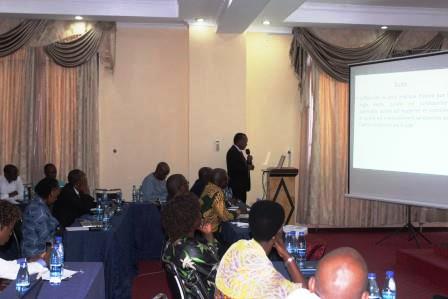 |
| Presentation by Mr. Damien NINDORERA |
Afterwards, the presenter addressed the effectiveness of Burundian environmental law. Thus, it was presented from three perspectives, including institutions, legal instruments and justice. From an institutional point of view, he noted that MINEAGRIE ensures the implementation and updating of environmental legislation as well as implementing texts.
Also, there are agencies specialized in certain areas of the environment such as the Burundian Office for Environmental Protection (OBPE), which deals with forest management, protected areas, impact studies, climate change, desertification. There are also legal experts who are used to draft environmental legislation and have representatives on the ground at the provincial level.
With regard to the legal instruments existing in Burundi in the field of the environment, the list below was presented:
- Law no. 1/010 of 30 June 2000
- Law no. 1/10 of 30 May 2011 on protected areas
- Law No. 1 /07 of 15 July 2016 revising the forest code
- Law no. 1/13 of 9 August 2011 on the land code
- Law No. 1/17 of 10 September 2011 on trade in wild fauna and flora
- Law No. 1/17 of 30 November 2016 on the Organization of Fisheries and Aquaculture in Burundi
- Law No. 1/02 of 26 March on the Water Code
- Law No. 1/23 of November 23, 2017 on the protection of plants in Burundi
- Law No. 1/08 of 11 May 2018 on the management of pesticides in Burundi
- Decree No. 100/22 of 7 October 2010 on measures to implement the Environmental Code in relation to the environmental impact study procedure
As for justice, the presenter pointed out that there are no special courts on the environment in Burundi. And that if there is a dispute between the Ministry in charge of the Environment and third parties, it is brought before the Administrative Court and judicial decisions are taken by this Court but are not numerous and are still enforceable.
According to the presenter, a few non-legal factors limit the effective application of the norm, in particular political instability, administrative instability, local custom, and the technical nature of the norm.
Afterwards, the presenter focused on the law relating to protected areas in Burundi and on impact studies of projects and activities harmful to the environment. In relation to these two cases, he explained their applicability, the modalities of their application as well as the non-legal factors that prevent their effectiveness.
The presenter concluded by stressing that there is an important range of texts that protect the environment. He added that by adopting a series of legal texts relating to the protection of the environment and by engaging in international conventions with the same objectives, Burundi is convinced that environmental law is an effective tool for the protection of the environment. He mentioned that the Ministry in charge of the Environment, supported by its operational structure the OBPE, plays a decisive role and has general policing authority in environmental matters. However, he regretted that most of the provisions contained in environmental protection laws were poorly known, poorly implemented and ineffective. The causes of this low effectiveness of environmental law are mainly due to:
- the ineffectiveness of control and implementation mechanisms;
- the lack of monitoring of compliance with environmental rules;
- the inadequacy and complexity of environmental protection rules;
- poverty, ignorance of environmental law by citizens.
Finally, he finished his presentation by making recommendations and ideas for thought:
- Make effective the preventive control mechanisms provided for in environmental law;
- Monitoring the implementation of the provisions of the Environmental Code is the responsibility of the technical services of the Ministry in charge of the Environment, which for this purpose receive specific powers to carry out preventive controls and general environmental monitoring;
- Strengthen the operational capacities of control structures by providing them with sufficient human, material and financial resources to fully carry out the tasks assigned to them;
- Strengthen the application of sanctions;
- Strengthen public education and awareness;
- Strengthen public education and awareness;
- Promote the participatory approach and incentive mechanisms.
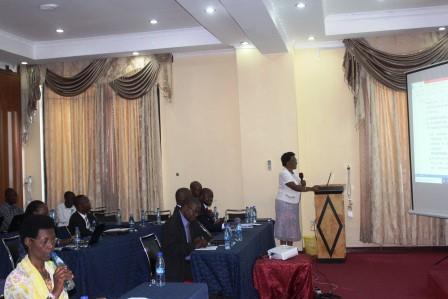
The penultimate presentation was on the theme “Importance of traditional medicine and associated knowledge in Burundi”. It was presented by Professor Marie Josée BIGENDAKO, researcher at the University of Burundi.
 |
The presenter started by defining what traditional medicine is. Health care is defined, according to WHO, as the total sum of knowledge, skills and practices, whether explainable or not, that are based on theories, beliefs and experiences specific to a culture and that are used to maintain human beings in good health as well as to prevent, diagnose, treat and cure physical, mental or social diseases that are based on the experiences or observations of the past transmitted from generation to generation orally or in writing. |
| Presentation by Madame Professor Marie Josée BIGENDAKO |
|
After this definition of traditional medicine, she pointed out that this medicine exists under its various practices but that the presentation in particular was going to be limited to that dealing with the somatic aspect (Phytotherapy), therefore that using medicinal plants and therefore Phytotherapy, which is the most practiced in Burundi.
After this definition of traditional medicine, she pointed out that this medicine exists under its various practices but that the presentation in particular was going to be limited to that dealing with the somatic aspect (Phytotherapy), therefore that using medicinal plants and therefore Phytotherapy, which is the most practiced in Burundi.
She explained that traditional medicine has been used for thousands of years and that practitioners of this medicine have contributed a lot to human health. She added that this medicine is not a matter for poor countries, developing countries, but also that developed countries also use it. According to the presenter, in Africa, traditional medicine is a common practice where 70-80% of the population opts for traditional medicine or traditional pharmacopoeia for primary health care.
In Burundi, as everywhere in developing countries, long before the introduction of modern medicine, there was a very widespread traditional therapist who had a profession known and respected by almost the entire population. The practice of this traditional medicine had and until today has medicinal plants as its basic instrument. The presenter added that the introduction of modern medicine in Burundi did not overtake traditional medicine. Thus, in some regions of the country, traditional practitioners today maintain a monopoly despite the presence of modern medicine. She explained that the lack of essential medicines, high drug prices, inadequate health care, and social habits justify the use of traditional medicine.
Burundian healers are currently organized into associations such as the Association of Healers of Burundi, Associations of Traditional Practitioners of Burundi (ATRABU), the Association la Source,... recognized by the Ministry of Public Health and the Fight against AIDS. The latter, in collaboration with traditional practitioners, developed a strategy document for the development of traditional medicine. Also, in 2016 a decree, regulating traditional medicine, was put in place.
According to the presenter, in Burundi, traditional medicine mainly uses medicinal plants. And the results of ethnobotanical surveys on these plants have made it possible to draw up a list of 938 species treating diseases related to the digestive tract, skin diseases,... She added that this list remains not exhaustive since there are still plants that remain unidentified up to the species level. However, she deplored that in Burundi few species of medicinal plants have been the subject of in-depth studies to be able to demonstrate their effectiveness. Nevertheless, some medicinal plants used in Burundi, having been studied elsewhere, have proven their effectiveness. These species include Bidens pilosa, Neorautanania mitis, Vernonia amygdalina, Vernonia amygdalina, Lantana trifolia, Ageratum conoides, Euphorbia hirta, Cassia occidentalis,... She said that these species are among the most frequent in Burundi, and can generate revenue in the country.
The presenter also recalled that there are still challenges facing traditional medicine in Burundi. These include the memorandum of understanding between traditional practitioners and other stakeholders, whose signing process started in 2016 and unfortunately did not go through to the end. In addition, she pointed out that financial resources remain a limiting factor in order to be able to conduct in-depth studies, at the University of Burundi, on medicinal plants.
In conclusion, the presenter said that traditional medicine is still a little-explored cultural heritage and that its potentialities and possibilities need to be studied. She added that traditional knowledge is a key contribution to the sustainable development of this traditional medicine.
The last presentation made by Mr Longin NDAYIKEZA was on the theme: “Ecosystem Services (ES) in the Protected Areas of Burundi”.
|
During this presentation, biodiversity was defined under its three levels, in particular ecosystem biodiversity, specific biodiversity or species biodiversity and finally genetic biodiversity. It has also been pointed out that man is at the center of this biodiversity who can at the same time decide to save or destroy it. In the event that humans destroy ecosystems, thanks to changes in land use, has it turned out that their restoration is often expensive and sometimes impossible?
|
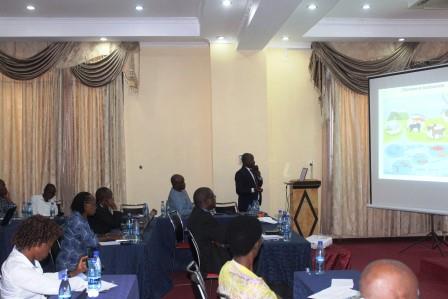 |
| Presentation by Longin NDAYIKEZA |
It was also explained that goods and services are essential for the sustainability of our well-being, as well as for future economic and social development. And that this was reflected in their various functions that they ensure, namely that of regulation, supply, cultural and ecosystem.
It was reported that in Burundi, the following actions have already been carried out in terms of the valorization of ecosystem services:
- Study of the ecosystem services of protected areas in Burundi;
- Ecosystem regulatory services: Pollination
- Ecosystem goods: Fungi
A recommendation was made in relation to this presentation on ecosystem services, in particular the development of an awareness-raising strategy on ecosystem services.
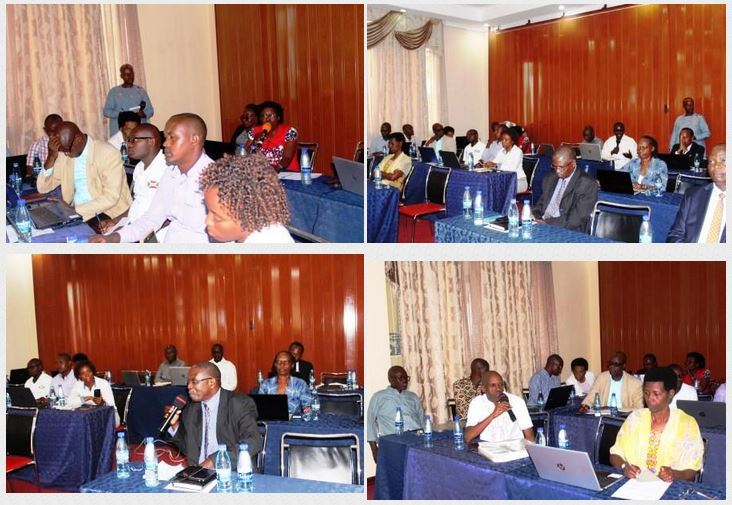
After these various presentations, the various participants intervened by asking for clarifications and making recommendations in relation to the various themes presented.
|
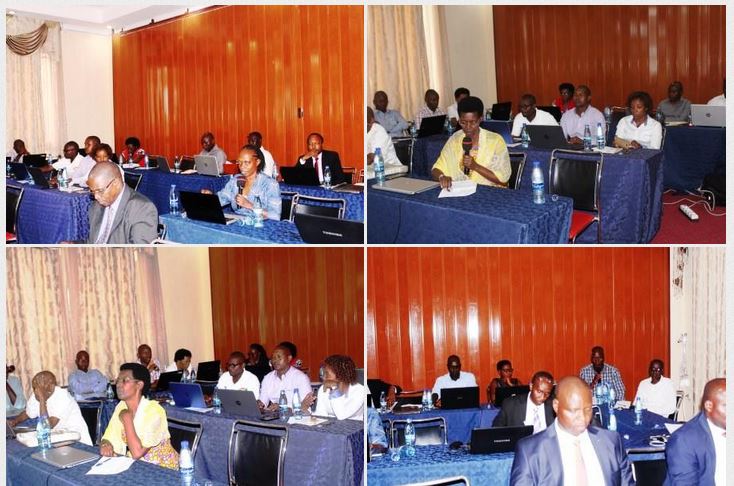
|
| Different interventions by participants in relation to the various presentations |
Through the discussions, the various recommendations were issued:
- In relation to pollution in the city of Bujumbura
- Managing waste sustainably instead of displacing pollution
- Raise awareness among the city's population about the harmful effects of their waste management method and on their sustainable management;
- Sort waste at source in order to valorize organic waste by composting;
- Require industries to connect their wastewater disposal system to treatment plants;
- Relocate people who built houses around the Mubone landfill in order to save their health;
- Apply the polluter pays principle to industries and businesses producing significant quantities of waste;
- Install sewer networks and increase the number of treatment plants.
- In relation to the effectiveness of environmental legislation in Burundi
- Review the Decree on Environmental Impact Assessments in order to incorporate strategic impact studies, environmental audits, etc.;
- Strengthen the capacity of the OBPE financially to monitor and evaluate the implementation of environmental impact studies;
Finally, the participants recommended that highly sensitive environmental topics should be developed and presented during the environmental day. They also added that the presence of decision-makers is essential in workshops in order to be able to learn about the situation of the environment in general and biodiversity in particular and thus become more involved in their sustainable management. *
After all the interventions, the OBPE DG Representative closed the meeting by thanking all the participants for their attention shown through the various interventions and the Belgian Institute of Natural Sciences having supported this activity and various activities in the field of biodiversity research in Burundi.